
Learn More About Us
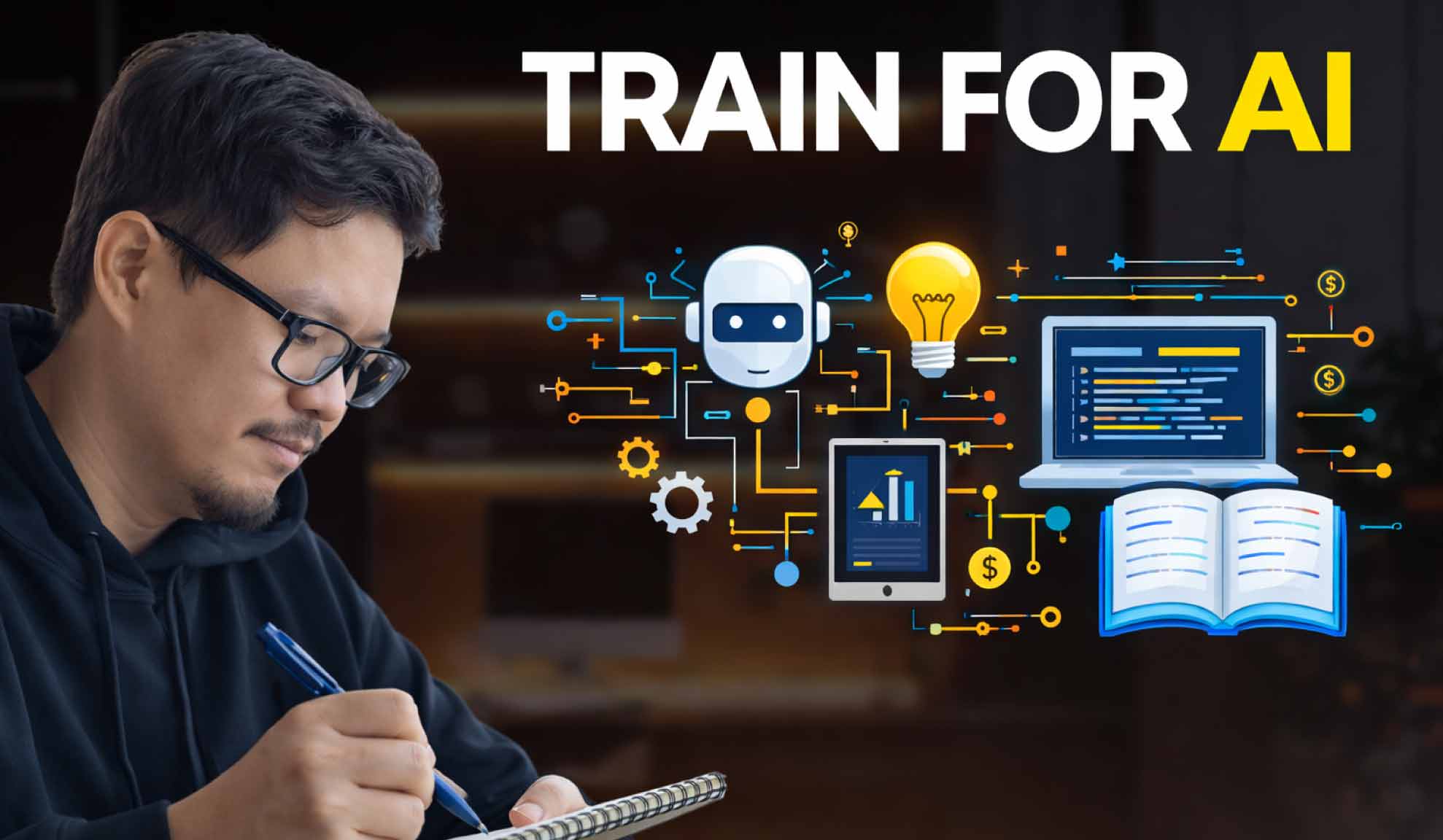
Building an AI-ready workforce takes three things working together: a culture that trusts the technology, roles redesigned for human-AI collaboration, and training embedded in daily work. IDC projects a global skills shortage that could cost up to $5.5 trillion by 2026, with over 90% of organizations expecting critical gaps. Workforce readiness, not algorithms, is the real bottleneck.
The biggest mistake leaders make with AI is over-investing in tools and under-investing in people. BCG's research is direct: across hundreds of AI deployments, roughly 70% of the value comes from people and process changes, 20% from technology and data, and 10% from algorithms. That is the 10-20-70 framework.
IDC found that 94% of CEOs and CHROs name AI as their top in-demand skill, but only 35% feel prepared to manage it. Only one in three employees received any AI training in the past year. Plenty of companies are buying ChatGPT Enterprise and Copilot licenses, then wondering why adoption stalls. The workforce was not ready.
Deloitte's research on enterprise AI adoption shows that high-performing organizations build their AI culture on three pillars.
Cultural Pillar | What It Looks Like |
|---|---|
Trust | Employees believe leadership intends to augment work, not cut headcount. Fear pairs with engagementThe interactions that users have with a brand’s content on social media. instead of resistance. |
Data fluency | Workers ask the right questions, evaluate model outputs, and refuse to accept results just because the model said so. |
Agility | Teams accept that not every AI pilot will succeed. They pivot fast, treat failure as data, and convert insight into action. |
Trust matters most for smaller businesses. If your team thinks AI is being introduced to thin the headcount, they will quietly avoid using it. A short, clear narrative from the top about how AI augments their work changes the adoption curve.
Most companies make a second mistake. They roll out AI tools without changing the underlying jobs. Gallup found 65% of employees at AI-adopting companies report personal productivity gains, but few report changes in how work actually gets done across the firm. The technology landed on top of old job descriptions.
Jobs for the Future built a useful framework. Every task in a role falls into one of five buckets: Replace, Displace, Complement, Augment, or Elevate. Replace and Displace cover the routine cognitive tasks AI absorbs. Complement and Augment are where humans get faster or unlock work they could not do alone. Elevate is what becomes more valuable as routine work disappears: judgment, relationships, strategic decisions.
A new layer of roles is also emerging that did not exist three years ago:
Smaller businesses do not need a dedicated AI Ethicist on day one. They do need one or two people whose job is figuring out where AI fits and where it should not.
Upskilling and reskilling sound similar, but solve different problems. Upskilling improves someone's existing skill set for their current role, like teaching a customer service rep to use generative AI for response drafts. Reskilling moves someone to a different role entirely, like a data entry clerk becoming a junior data analyst. IBM estimates 40% of the workforce will need one or the other over the next three years.
In February 2026, the U.S. Department of Labor released a national AI Literacy Framework with five content areas every corporate training program should cover:
Format matters as much as content. Annual compliance videos do not produce AI-fluent employees. BCG's data shows learning works best when it is embedded in the flow of daily work: real tools, real tasks, real feedback. Future-built companies are four times more likely to carve out protected, paid learning time, and they leadA potential customer referred by an affiliate who has shown interest in the product or service but h... with executive role modeling.
The companies that win the next five years will not be the ones with the most AI tools. They will be the ones whose people know how to use those tools with judgment, confidence, and a clear business purpose. Building an AI-ready workforce means creating trust, redesigning roles around human-AI collaboration, and turning training into part of everyday work instead of a once-a-year exercise.
If you need help making AI work for both your team and your search visibility, Bliss Drive's AI visibility services cover strategy, training, and content together.
Upskilling improves existing skills for a current role, like training an account manager to use AI for client research. Reskilling moves someone to a different role entirely, like a data entry clerk into a junior data analyst. IBM estimates around 40% of the workforce will need one or the other in the next three years.
A reasonable enterprise roadmap runs 12 to 18 months: foundation in months 1 to 3, pilots and cultural shifts in months 4 to 6, enterprise scale and workflow redesign in months 7 to 12, and continuous improvement after that. Smaller businesses can compress to 6 to 9 months by piloting in one team first.
Routine cognitive roles see the biggest changes: customer service, administrative work, data entry, basic content productionThe process of creating content, including writing, designing, and editing., and entry-level analysis. Jobs for the Future found that tasks at risk of displacement are important to 98% of the top ten highest-employment occupations. The same roles also depend on Elevate tasks like judgment and relationships, which AI cannot replicate.
Start with one high-value workflow: content production, sales prospecting, or customer supportServices provided to assist customers before, during, and after a purchase to ensure a positive expe.... Pick one team to pilot on real work with real tools, give them protected time, and measure output before and after. Most small businesses find their first wins within 60 to 90 days, then expand once the team has internal proof.