
Learn More About Us
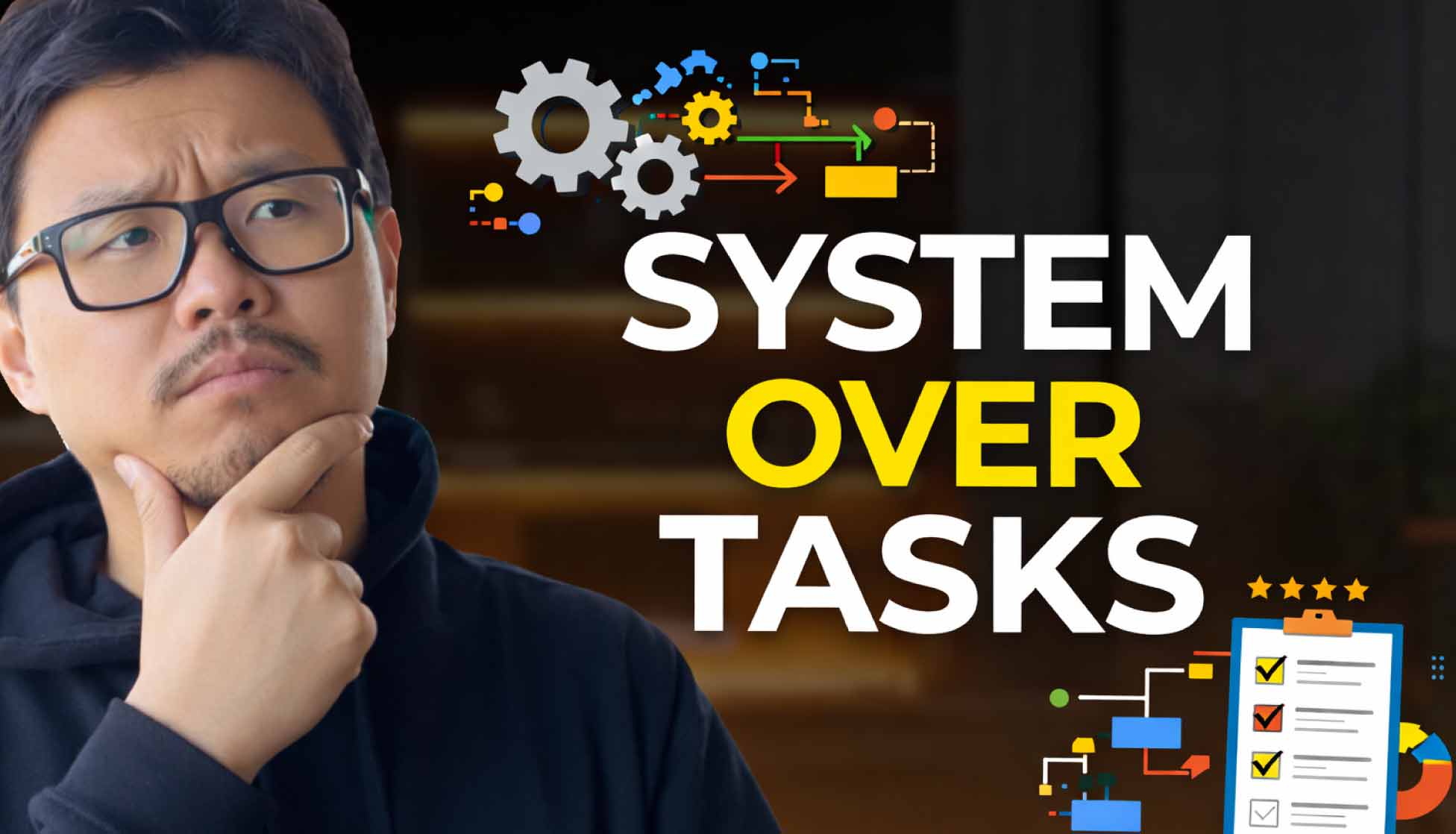
Multi-agent AI systems are changing how businesses automate complex work. Instead of relying on one AI model to manage every step, these systems use teams of specialized AI agents that plan, retrieve information, call tools, check outputs, and hand tasks to one another.
That structure matters because real business workflows are rarely simple. Fraud reviews, compliance checks, clinical support, supply chain planning, and customer service all require multiple steps, different data sources, and clear decision points. Multi-agent systems are designed for that kind of work. They break large workflows into smaller roles, which can make automationUsing software to send emails automatically based on predefined triggers and schedules. faster, easier to monitor, and more resilient when one step fails.
But the opportunity comes with a warning. Multi-agent AI is not plug-and-play automation. The companies seeing the strongest results are not just adding agents to old processes. They are redesigning workflows first, defining each agent’s job clearly, and building controls that catch errors before they move downstream.
A multi-agent AI system is a group of autonomous AI agents that share an environment, each with its own role, prompt, tools, and memory, working together to complete a task that no single agent could finish alone. Think of it as a small team of specialists instead of one generalist trying to do every job.
Each agent runs the same four-step loop: perceive the environment, reason about what to do, act through tools or APIs, and communicate with peer agents or human operators. The shift from single-agent to multi-agent design distributes cognitive load. One model no longer has to plan, call tools, reason about a domain, and synthesize results inside the same context window.
The move toward multi-agent systems is part of a larger shift from simple AI assistants to AI tools that can take action across workflows. The global AI agents market is projected to grow from $7.84 billion in 2025 to $52.62 billion by 2030, showing how quickly businesses are moving from experimentation to implementation.
Google Cloud’s 2025 executive study also found that 74% of executives reported seeing ROI from generative AI within the first year, while 52% said their organizations had already deployed AI agents. Those numbers do not mean every agent project succeeds, but they do show why more companies are testing agent-based workflows in areas like operations, customer service, finance, and compliance.
Single-agent systems break down under workflow complexity. Multi-agent systems handle parallel work, recover from failed steps, and keep each agent's context window clean. That difference is the main reason enterprises are moving past first-generation generative AI assistants.
Dimension | Single-Agent | Multi-Agent |
|---|---|---|
Cognitive load | One model handles planning, tool calls, and domain reasoning | Specialized agents focus on narrow sub-domains |
Context window | Prone to token bloat and lost-in-the-middle issues | Each agent keeps a clean, local context |
Workflow complexity | Limited to linear, sequential tasks | Supports parallel execution and branching |
Failure recovery | Single point of failure halts the workflow | Failed tasks reroute to peer agents |
Scalability | Latency and errors compound with scale | Performance stays stable under load |
In a 2026 Mount Sinai study, a coordinated multi-agent system handled up to 80 simultaneous clinical tasks at high accuracy and used up to 65 times fewer computing resources than a single-agent design doing the same work. That is the gap between a system that scales and a system that stalls.
The clearest enterprise wins come from workflows with high variance, high coordination, and clear sub-tasks. Three patterns leadA potential customer referred by an affiliate who has shown interest in the product or service but h... the field.
A bank runs a Transaction Monitoring Agent, a Risk Scoring Agent, a Regulatory Compliance Agent, and a Customer Communication Agent in parallel. When a suspicious transaction triggers, each contributes its piece: transaction history, risk profile, AML and KYC checks, and a compliant customer notification. Banks using this setup report up to 70% reductions in false-positive fraud alerts.
The Mount Sinai study uses an Orchestrator agent that delegates to an Information Retrieval Agent (scanning EHRs), a Data Extraction Agent (pulling lab values), and a Medication Dosing Agent (calculating drug interactions). Coordination kept the system stable under heavy simulated workloads where a single-agent setup would have stalled.
An Inventory Monitoring Agent watches stock. When a shortage triggers, Supplier Negotiation Agents query supplier APIs for bids while a Logistics Routing Agent analyzes weather and shipping data for the fastest path. The full cycle runs without human intervention until a final approval step.
LangChain's architecture research groups produce multi-agent systems into four core patterns:
Joint research from UC Berkeley and Intesa Sanpaolo found that multi-agent systems can fail at rates above 50% in production if poorly designed. Three failure modes cause most of the damage.
McKinsey's lesson from a year of agentic deployments: success comes from redesigning the workflow first (people, process, technology) and then building the agents around it. Teams that treat agent rollout as a pure software project underperform.
The patterns that separate high-ROI deployments from costly failures:
Multi-agent AI systems can make complex workflows faster, more resilient, and easier to scale, but they are not plug-and-play automation. The strongest results come when businesses redesign the workflow first, define each agent’s role clearly, monitor every handoff, and evaluate intermediate outputs before errors compound downstream.
If your brand is not showing up in ChatGPT, Google AI Overviews, Perplexity, or Gemini, you are already losing visibility where customers are searching. Bliss Drive’s AI Visibility services help businesses improve how they appear across AI-powered search platforms through content optimizationImproving content to enhance its performance and effectiveness., citationA mention of a business's name, address, and phone number on other websites. analysis, and an AI search strategy built for the next generation of discovery.
A single AI agent handles one task or domain on its own, using one model and one context. A multi-agent system is a coordinated network of agents, each with a specific role, that pass work and context to each other. The multi-agent setup handles workflows too complex or too parallel for a single agent to manage cleanly.
The three main open-source options are CrewAI (role-based teams, fast to prototype), Microsoft AutoGen (conversational multi-agent patterns, strong for research and dynamic workflows), and LangGraph (graph-based state machines, the most production-ready). Enterprise platforms include Salesforce Agentforce, IBM WatsonX Orchestrate, and Kore.ai. Pick by workflow complexity and whether you want low-code or full control.
For workflows that hit single-agent limits, yes. Common SMB use cases include customer service triage, sales lead routing, and content productionThe process of creating content, including writing, designing, and editing. pipelines. Start with one well-defined workflow rather than a general AI agent deployment. The 74% positive-ROI figure in early enterprise data came from focused use cases, not broad rollouts.
Silent failure. A single-agent error usually halts the workflow visibly. A multi-agent system can pass a flawed intermediate output downstream and deliver a polished, wrong answer. That's why layered evaluation and observability matter more in multi-agent than in single-agent setups.