

Learn More About Us
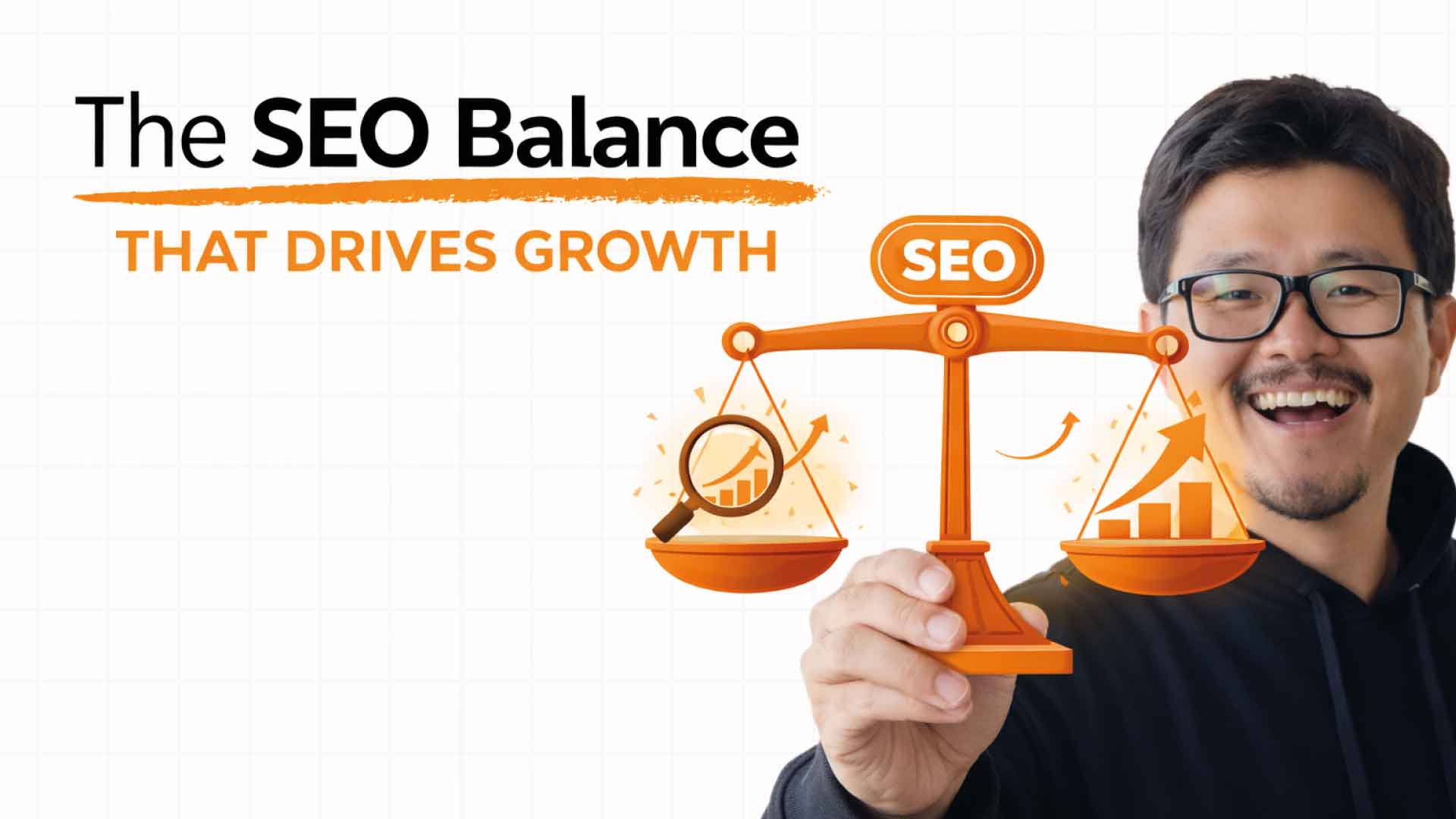
You have limited time and resources, so “both matter” doesn’t help. The practical decision is which workstream removes your biggest constraint first. On-page SEOOptimization techniques performed directly on the website, including content and HTML source code. improves what you control on your site. Off-page SEOOptimization actions taken outside the website, primarily involving backlinks and social media. improves how the rest of the web evaluates your site. Both are required to compete long-term, but they do not have equal leverage at every stage.
For most sites, the highest-ROI sequence is straightforward: build pages that deserve to rank, then build the authority that helps them outrank competitors. If you reverse that order, you often pay to amplify weak pages and get little to show for it.
Takeaway: On-page SEO is the foundation. Off-page SEO is the amplifier. Build the foundation before you spend effort on amplification.
On-page SEO includes the elements you can directly change: page content, intent match, titles and headings, internal linkingLinks that connect different pages on the same website., technical performance, crawlability, mobile usability, and user experience. The goal is relevance and usability—pages that answer the query and perform well.
Off-page SEO includes external signals that contribute to authority and trust: links, brand mentionsInstances where a brand is mentioned or tagged on social media platforms., citations, reviews, and PR-driven visibility. The goal is credibility—signals that other entities value your site enough to reference it.
This comparison focuses on what you can expect operationally, not theory.
Factor | On-Page SEO | Off-Page SEO |
Control | High (you implement directly) | Lower (depends on third parties) |
Feedback speed | Faster to iterate | Slower to accumulate |
Primary outcome | Relevance + UX + crawlability | Authority + trust signalsElements that build trust with visitors, such as security badges, testimonials, and privacy policies... |
Risk profile | Lower | Higher if quality is poor |
Cost pattern | Mostly internal time/tools | Often outreach/content/relationships |
Competitive role | Gets you eligible to rank | Helps you win competitive SERPs |
Off-page SEO multiplies whatever you already have. Links and mentions point to pages. If those pages are thin, misaligned with intent, slow, or confusing, you don’t just waste authority—you waste the attention those links could have delivered. Strong off-page work performs best when it routes people and search engines to pages that satisfy the query and convert.
On-page SEO also creates the assets that make off-page easier. The most efficient link acquisition happens when you have content, tools, or resources worth citing. If your site has no pages that feel reference-worthy, off-page becomes a grind of outreach with lower success rates.
Technical fundamentals matter here too. If your site has crawl issues, indexation problems, or poor mobile performance, authority signals can be partially muted. Search engines still evaluate whether the destination is accessible and useful. That’s why foundations usually come first.
Prioritize on-page SEO when the limitation is on your site, not your reputation. This includes cases where content does not match intent, key pages are thin or outdated, internal linking is weak, or technical issues reduce crawlability and performance. If users land and leave quickly, or if pages do not clearly answer the query, off-page won’t fix the core problem.
On-page is also the best starting point when you need predictable progress. You can ship improvements immediately and measure their impact through rankingsThe position at which a website appears in the SERP., engagementThe interactions that users have with a brand’s content on social media., and conversions. Even in competitive markets, on-page determines whether you can compete at all.
Shift emphasis to off-page SEO when on-page fundamentals are already strong but you still cannot break into top positions. That pattern usually indicates an authority gap. In competitive niches, many sites have good content and solid technical execution. The differentiator becomes trust signals—links, mentions, and brand presence—especially for high-value terms.
Off-page also makes sense when you already have “linkable” assets that have not been promoted. If you’ve built original research, definitive guides, tools, templates, or strong comparisons, off-page outreach can unlock value that is currently dormant. In those cases, you’re not trying to compensate for weak pages—you’re distributing strong ones.
Instead of asking “which is more important,” allocate based on what is currently limiting performance. If content quality, intent match, and technical health are behind, weight effort toward on-page. If pages are strong but rankings stall behind better-known competitors, weight effort toward off-page.
A practical rule is to rebalance over time. Early effort tends to skew on-page because you’re building inventory and fixing technical blockers. As your site matures and you target more competitive terms, off-page usually earns a larger share because authority becomes the constraint.
Ask questions that map to observable signals.
Is the site technically healthy? If crawlingThe process by which search engines discover new and updated web pages to index., indexingThe process of adding web pages into a search engine's database., speed, or mobile usability is weak, fix on-page first because everything else depends on access and performance.
Does the content satisfy intent? If engagement is low and users do not complete the next action, improve the page before you promote it.
Are competitors beating you on authority? If your pages are comparable but their domains consistently outrank you, off-page becomes the priority.
Are you targeting terms that require authority? Some queries can be won with excellent content alone. Others reliably require strong external validation.
Do you have the capacity to do outreach well? Off-page work often fails due to inconsistent execution. If you can’t sustain it, invest in on-page until you can.
The most expensive mistake is building links to pages that are not ready—slow pages, thin pages, or pages that don’t match intent. Another common failure is expecting off-page work to compensate for weak content. Even when links move rankings temporarily, users bounce and performance decays.
The opposite mistake also happens: teams stay in on-page forever because it feels controllable. In competitive spaces, there is a point where authority is the constraint. Avoid low-quality shortcuts when you make that shift. Poor links can create risk that outweighs the upside.
Stop asking which category is more important in general. Prioritize what removes your current bottleneck. For most sites, that begins with on-page: technical health, intent-matched content, clear structure, and internal linking. Once those are solid, off-page work becomes meaningfully more effective because it amplifies pages that deserve attention and can convert it.
Takeaway: Build relevance and usability first. Then build authority to win the SERP.