Learn More About Us
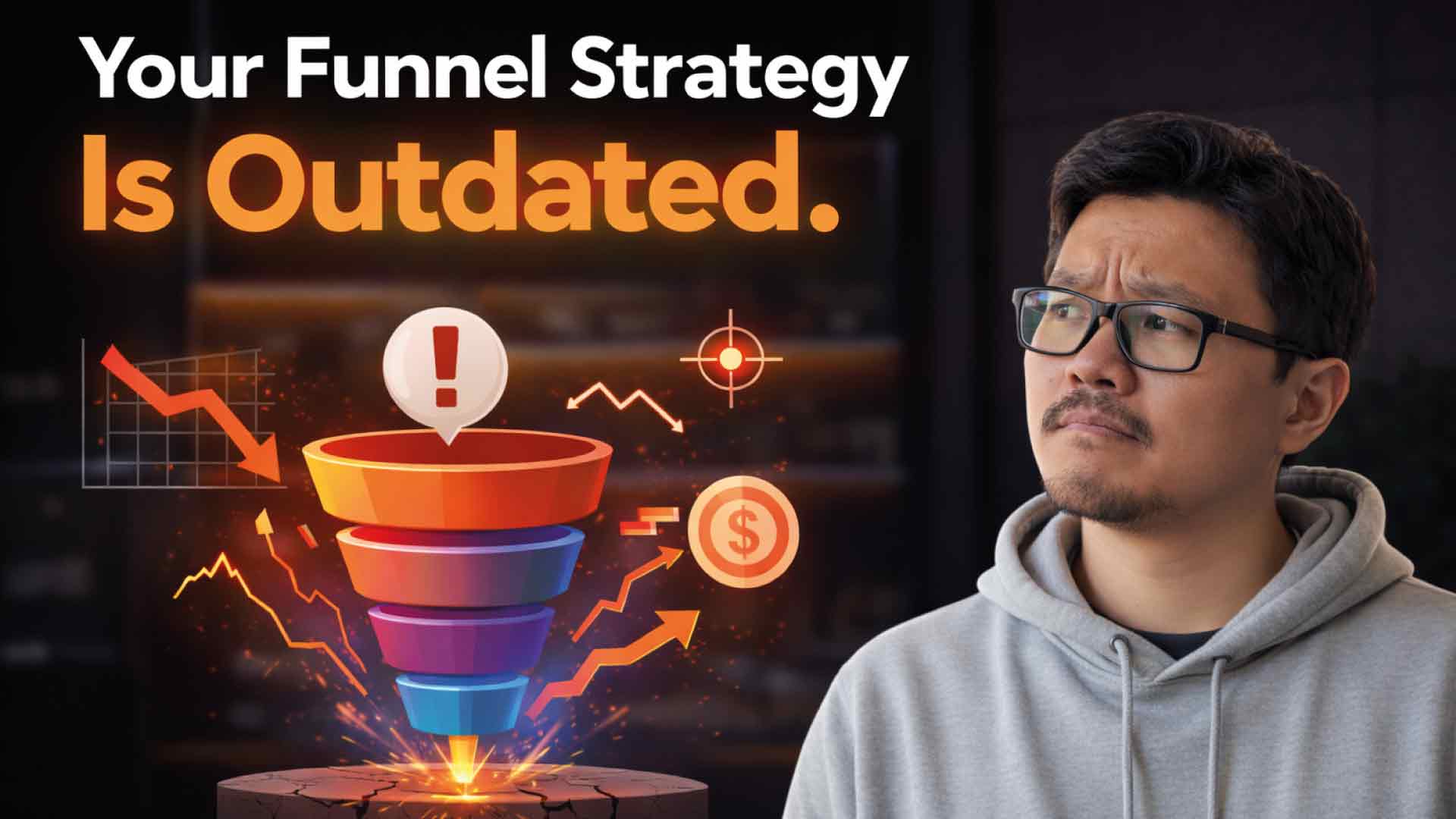
The marketing funnel isn’t dead, but it no longer works the way it used to. AI platforms like ChatGPT, Perplexity, and Google’s AI Overviews are inserting themselves between your brand and your customer at every stage of the journey. Gartner predicts that AI-powered search will handle 25% of all search queries by 2026 and that one in five purchases will be completed by an AI agent. Meanwhile, 58.5% of Google searches in the U.S. already end without a single click to any website.
For marketers, this changes everything: how people discover brands, how they compare options, and how they make final decisions. This guide breaks down what’s shifting at each funnel stage, and what it means for your strategy.
The traditional funnel assumes customers move in a predictable sequence: awareness, consideration, decision. In reality, customers in 2026 bounce between exploration and evaluation in what Google’s research calls the “Messy Middle”, and AI is accelerating that behavior. A buyer might ask ChatGPT for recommendations, read an AI-generated comparison, leave for a week, see a social media post, return to Perplexity for fact-checking, and then convert through a direct visit.
AI compresses this journey dramatically. Where a buyer might have needed six to ten touchpoints across multiple websites, an AI conversation can deliver discovery, comparison, and a shortlist in minutes. Search Engine Land reports that AI search delivers three- to eight-times higher conversionThe completion of a desired action by a referred user, such as making a purchase or filling out a fo... rates than traditional search because the funnel stages happen inside the AI’s response, not across your website. The customer who arrives has already been filtered for intent.
This table compares what each funnel stage looked like before AI and what it looks like now:
Funnel Stage | Traditional Journey | AI-Powered Journey | What Changes for Marketers |
Discovery | User types keyword into Google, clicks blue links, visits multiple sites | User asks AI a question, gets a synthesized answer with cited sources—often without clicking through | Visibility means being cited in AI responses, not just ranking on page one |
Comparison | User opens multiple tabs, reads reviews, scrolls through comparison blogs | AI compiles pros, cons, pricing, and recommendations in one conversational response | Structured, fact-dense content gets cited; vague marketing copy gets skipped |
Decision | User clicks CTA, fills out form, or makes purchase after multiple sessions | AI narrows options to 2–3 recommendations; user arrives ready to act with 4.4x higher conversion rateThe percentage of visitors who complete a desired action, such as making a purchase or filling out a... | Fewer visits but higher-intent traffic; optimize for conversion, not volume |
Post-Purchase | Email sequences, surveys, loyalty programsRewards programs offered by businesses to encourage repeat customers and increase customer loyalty. drive retention manually | AI predicts churn risk, triggers outreach, and personalizes upsell recommendations automatically | Retention becomes data-driven and proactive, not reactive |
Discovery is the stage being disrupted most aggressively. ChatGPT now accounts for 20% of search-related traffic worldwide. The platform crossed 800 million weekly active users by late 2025 and processes over two billion queries per day. Perplexity handles 780 million monthly queries. Together with Google’s AI Overviews, which now appear for over 13% of search results, AI platforms are becoming the first place many people go for answers.
The critical difference is that 93% of AI search sessions end without a click to any website. When a prospect asks ChatGPT “what’s the best project management tool for startups?” and gets a synthesized answer, the brands mentioned in that response get visibility, whether the user clicks through or not. Brands cited in AI Overviews earn 35% more organic clicks and 91% more paid clicks than those not cited. Discovery is no longer about ranking on a search results page. It’s about being the source AI platforms quote.
The comparison stage has been fundamentally compressed. Instead of opening ten browser tabs to read reviews, comparison articles, and pricing pages, buyers now ask an AI to do that synthesis in one conversation. AI platforms pull from structured content, comparison tables, spec sheets, pricing data, and review aggregators, and compile it into a single response. By late 2025, AI Overviews started appearing for commercial queries at more than double the previous rate, increasing from 8% to 18% of commercial search results.
This has major implications for content strategyA plan for creating, publishing, and managing content to meet business goals.. Content with statistics, citations, and structured data achieves 30–40% higher visibility in AI responses. Vague marketing language gets skipped in favor of content that answers questions directly with specific facts. Blog posts are the number-one page type cited in AI Overviews, but only when they offerThe specific product or service being promoted by affiliates. genuine comparative analysis, not thinly disguised sales pitches. The brands winning at the comparison stage are the ones creating honest, data-rich content that AI systems find genuinely useful.
The decision stage is where AI’s impact is most measurable. Visitors arriving through AI referrals convert at dramatically higher rates than traditional organic traffic. Semrush found that AI-referred traffic is worth 4.4 times more than standard organic visits. Other studies show AI search traffic converting at 14.2% compared to Google’s 2.8%, and in some cases, as high as 23 times better than traditional organic, according to Ahrefs analysis.
Why the gap? Because AI does the comparison work before the user ever reaches your site. By the time someone clicks through from a ChatGPT recommendation, they’ve already been filtered for intent. They’re not browsing; they’re ready to act. Gartner predicts that one in five purchases will be completed by an AI agent in 2026, and some AI systems are beginning to enable full transactions inside the conversation itself, without the buyer ever visiting a website. For marketers, this means fewer total visitors but much higher-quality traffic. Optimizing for conversion rate matters more than optimizing for traffic volume.
Adapting to the AI-influenced funnel doesn’t require abandoning everything you’re doing. It requires shifting emphasis:
Is the marketing funnel completely dead?
No, but it’s no longer linear. Buyers still move through discovery, comparison, and decision stages. The difference is that AI compresses these stages, sometimes handling all three in a single conversation. Marketers need to optimize for each stage within AI responses, not just on their own websites.
How do I get my brand cited by AI platforms?
Focus on structured content with specific data, comparison tables, and clear answers to common questions. Build domain authority through quality backlinksLinks from other websites pointing to your website, crucial for SEO., third-party reviews, and platform presence on sites like G2, Reddit, and YouTube. Content freshnessThe relevance and recency of content on a web page. matters; pages updated within two months earn significantly more AI citations.
Should I stop investing in traditional SEO?
No. Traditional search still drives the majority of web trafficThe number of visitors to a website, often used as a measure of an affiliate's reach and influence.. But the share going to AI is growing fast; AI referral trafficVisitors who come to a website through an affiliate's promotional efforts. surged 527% year over year in early 2025. The smartest approach is to build content that performs well in both traditional search and AI citation. The good news is that the same qualities that earn AI citations, structured data, authority, freshness, also improve traditional SEO performance.
Does zero-click search mean my website doesn’t matter?
Your website matters more than ever for the visitors who do arrive, because they come with higher intent. AI-referred visitors convert at 4.4x the rate of traditional organic traffic. The shift is from volume to value: fewer visitors, but each one is more likely to become a customer.
AI is reshaping how customers discover, compare, and choose brands; compressing the entire marketing funnel into fewer touchpoints with higher intent. The businesses that adapt will treat AI platforms as a new discovery channel, create content that AI systems want to cite, and optimize for conversion quality over traffic quantity.
Takeaway: The funnel isn’t gone, it’s been compressed. Discovery, comparison, and decision still happen. They just happen faster, inside AI conversations, and with fewer clicks. The brands that show up in those conversations win.
Want to know how AI platforms are currently representing your brand at every stage of the buyer journey? Our AI Visibility Report shows exactly how ChatGPT, Claude, Gemini, and Perplexity describe your business when prospects are discovering, comparing, and deciding, plus a prioritized roadmap to improve your visibility. Get Your AI Visibility Report.