

Learn More About Us
Three years ago, search optimization meant one thing: SEO. You optimized your pages for Google’s algorithm, earned backlinksLinks from other websites pointing to your website, crucial for SEO., and tracked your rankingsThe position at which a website appears in the SERP.. That was the playbook.
Today, the search landscape has fractured. People still use Google—but they’re also asking ChatGPT, querying Perplexity, reading Google’s AI Overviews, and talking to voice assistants. Each of these channels surfaces information differently, and each requires a different type of optimization.
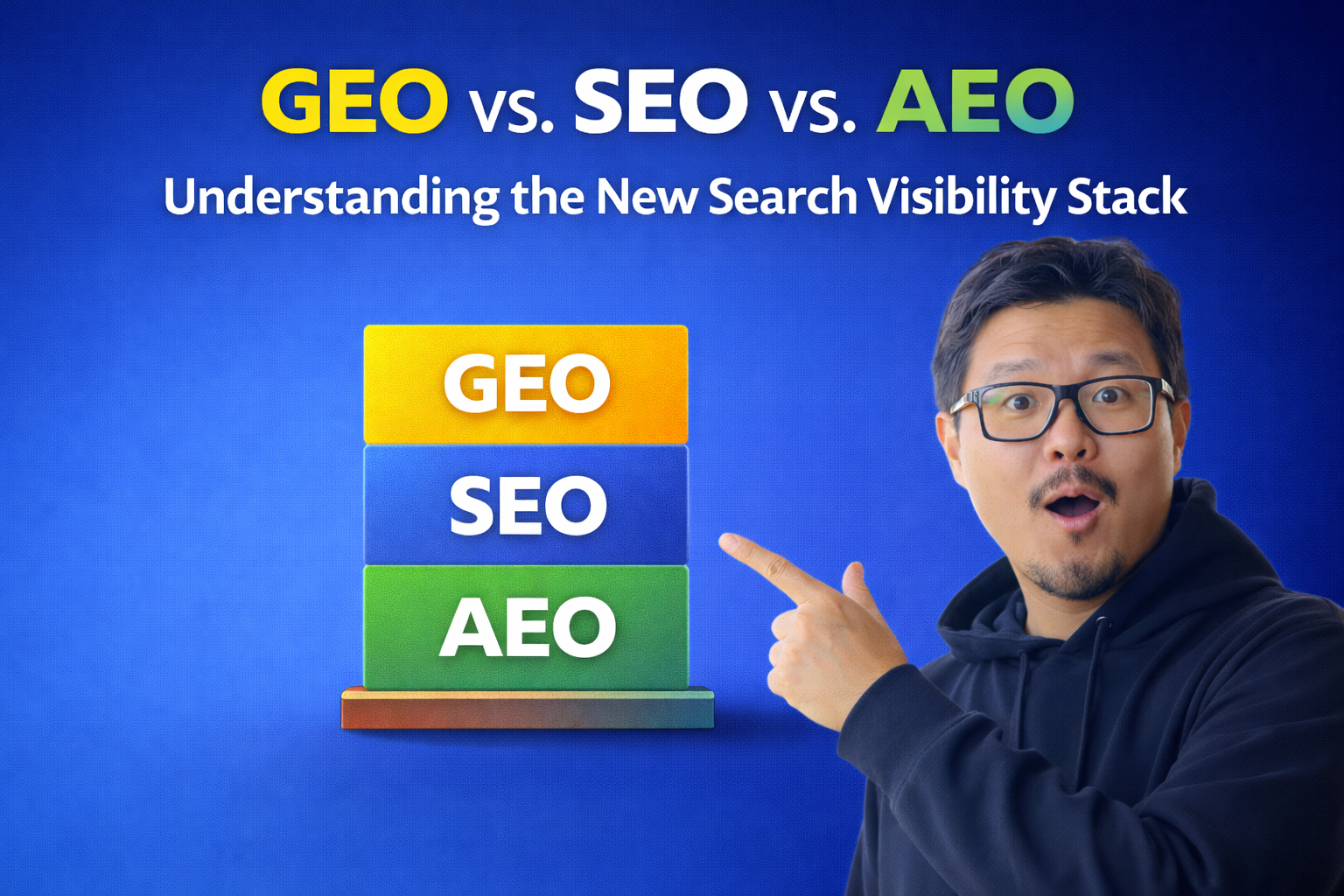
That’s where three acronyms come in: SEO (Search Engine Optimization)The process of improving the visibility of a website on search engines via organic search results., AEO (Answer Engine Optimization), and GEO (Generative Engine Optimization). They’re not competing strategies—they’re layers of a single search visibility stack. Understanding what each does, where they overlap, and how they differ is the first step toward staying visible across all the ways people search in 2026.
Before comparing, it helps to define each strategy clearly. While the terminology is still evolving—the industry hasn’t fully settled on standardized definitions—here’s how each approach functions in practice:
SEO is the practice of optimizing your website and content to rank higher in traditional search engine results pages (SERPs). It’s been the backbone of digital marketing since the 1990s and encompasses on-page optimizationImproving individual webpages to rank higher and earn more relevant traffic in search engines. (keywordsWords or phrases that users type into search engines to find information., meta tagsHTML tags that provide information about a web page to search engines and visitors., content quality), off-page optimization (backlinks, brand mentionsInstances where a brand is mentioned or tagged on social media platforms.), and technical optimization (site speed, mobile-friendliness, crawlability). The goal is to earn organic trafficVisitors who come to a website through unpaid search engine results. by appearing prominently when users search Google, Bing, or other traditional search engines.
AEO emerged as search engines began delivering direct answers rather than just links. It focuses on structuring content so it gets selected as the answer in featured snippets, knowledge panels, People Also Ask boxes, Google’s AI Overviews, and voice assistant responses. AEO prioritizes FAQ formatting, concise Q&A structures, schema markupCode added to a website to help search engines understand the content., and clear, extractable language. The goal is to be the answer users see without needing to click through to a website—what’s often called “position zero.”
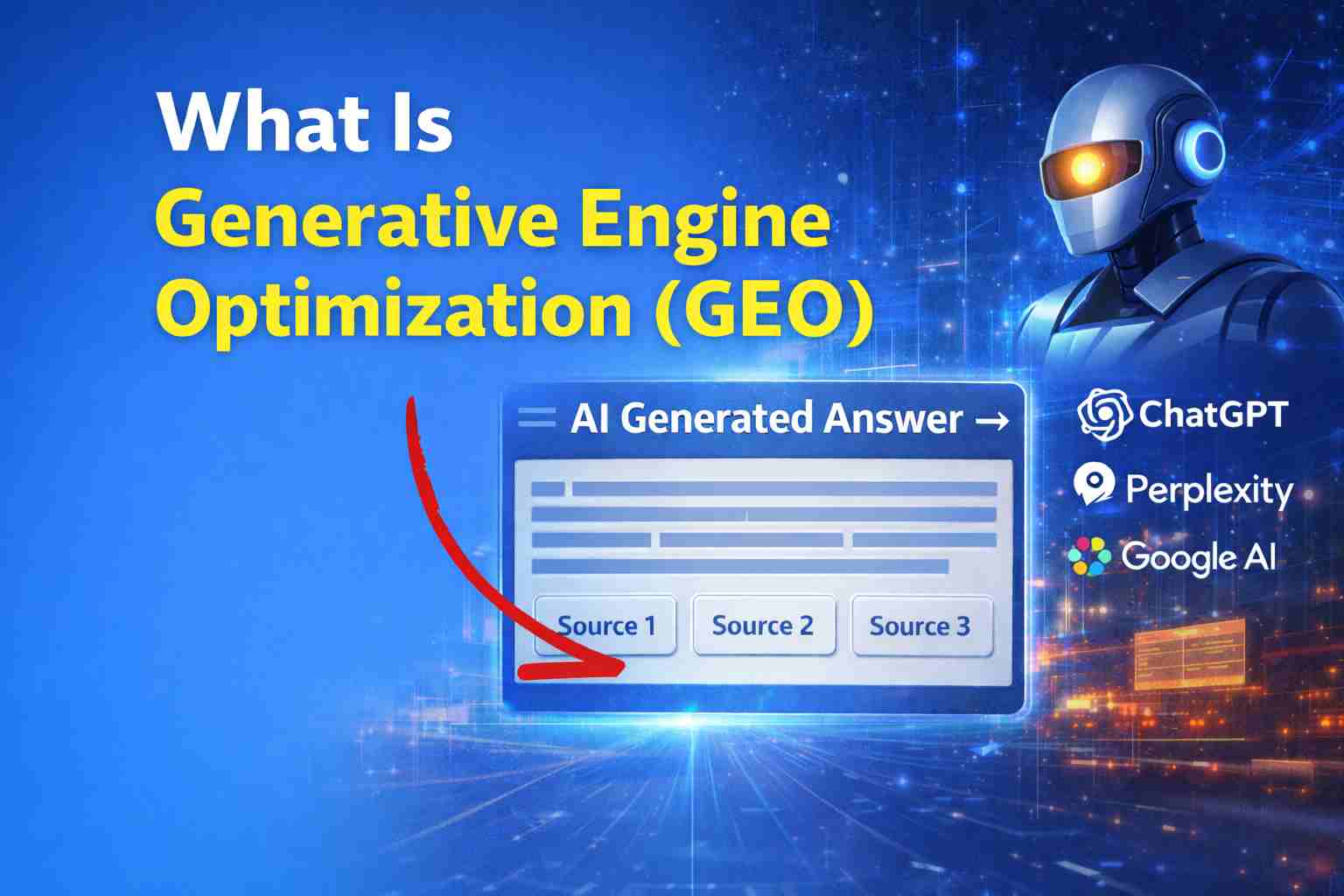
GEO is the newest layer. It focuses on making your content discoverable and citable by AI-powered platforms like ChatGPT, Perplexity, Gemini, Claude, and Microsoft Copilot. These platforms don’t rank pages in a list—they synthesize answers from multiple sources and cite the most authoritative, relevant content. GEO involves building topical authority, increasing fact density, earning third-party brand mentions, and structuring content so AI models can parse and reference it accurately. The goal is to be cited in the AI’s generated response.
This comparison highlights the key differences and overlaps across all three approaches:
Factor | SEO | AEO | GEO |
Primary Goal | Rank in search results | Be selected as the direct answer | Be cited in AI-generated responses |
Target Platforms | Google, Bing, Yahoo | Featured snippets, AI Overviews, voice assistants | ChatGPT, Perplexity, Gemini, Claude, Copilot |
Success Metric | Rankings, organic traffic, CTR | Snippet ownership, zero-click visibility | CitationA mention of a business's name, address, and phone number on other websites. rate, brand mentions in AI outputs |
Content Focus | Keywords, backlinks, technical health | Q&A formatting, schema, concise answers | Fact density, authority signals, structured data |
User Behavior | Clicks a link, visits a page | Reads answer directly in search results | Reads AI response, may click cited source |
Competition Level | 10 organic results per page | 1 featured snippetA summary of an answer to a user’s query, displayed at the top of Google’s search results. per query | 2–7 cited sources per AI response |
Time to Results | 3–12 months | Weeks to months | 3–6+ months |
Control Level | Moderate (algorithm-dependent) | Limited (engine selects the answer) | Low (AI model decides citations) |
Maturity | Established (30+ years) | Evolving (5–10 years) | Emerging (1–2 years) |
Dependency | Foundation for AEO and GEO | Builds on SEO foundations | Builds on SEO + extends to AI ecosystem |
The key takeaway from this comparison: these strategies are cumulative, not competitive. SEO builds the foundation that AEO and GEO rely on. Each layer addresses a different way users discover information in 2026.
Despite their differences, the three strategies share more common ground than most discussions acknowledge. Understanding these overlaps reveals why a unified approach works better than treating them as separate programs.
Content quality is universal. Whether you’re optimizing for Google’s algorithm, a featured snippet, or an AI citation, the starting point is the same: authoritative, well-structured content that genuinely answers user questions. Thin contentLow-quality content that offers little value to users. fails across all three channels.
E-E-A-T signals matter everywhere. Experience, Expertise, Authoritativeness, and Trustworthiness influence traditional rankings, snippet selection, and AI citation decisions. Author credibility, source citations, and brand authority compound across all three layers.
Structured data helps all three. Schema markup aids Google in understanding your content for rankings, helps search engines select your content for featured snippets, and makes your content machine-readable for AI crawlers. Implementing schema is a single action that pays dividends across the entire stack.
Technical health is table stakes. Site speed, mobile optimizationDesigning and formatting web content to ensure it performs well on mobile devices., crawlability, and clean URL structures affect how well search engines index you, how reliably answer engines extract from you, and how efficiently AI bots access your content.
Strong SEO supports the other two. Research consistently shows that AI platforms pull heavily from top-ranking organic results. Approximately 99% of Google AI Overview citations come from the organic top 10, and a significant share of ChatGPT citations correspond to top Bing results. Ranking well organically is the most reliable path to visibility across all channels.
While the overlaps are significant, each layer addresses a distinct aspect of modern search behavior. Here’s where they diverge:
SEO is fundamentally about competition for position in a list. You’re optimizing to appear among the 10 organic results on a search engine results page. Success is measured in rankings, click-through rates, and organic traffic volume. The audience consists of users who type a query, scan results, and click a link. SEO’s strength is its scale—Google processes an estimated 8.5 billion searches per day—and its established role as the primary driver of website traffic.
AEO shifts the goal from appearing in a list to being the single selected answer. When Google displays a featured snippet, it typically selects one source to answer the query directly. With AI Overviews appearing in roughly 20% of Google searches, this answer-first behavior is expanding rapidly. AEO optimizes for these zero-click environments through structured Q&A content, concise answer formatting (50–60 words for featured snippet answers), and clear question-based headings that match how users phrase queries.
GEO operates in a fundamentally different environment. AI platforms don’t show a list or select a single answer—they synthesize information from multiple sources into a conversational response and cite 2–7 sources. Getting cited requires signals beyond what SEO and AEO address: third-party brand mentions across the web, consistent entity recognition, topical authority across related content clusters, and off-site validation through press coverage, reviews, and expert citations. As one industry expert framed it, AEO is about formatting answers while GEO is about earning them through a broader ecosystem strategy.
The case for a unified SEO + AEO + GEO strategy comes down to how user behavior is fragmenting across platforms:
Search behavior is splitting. Users now research across multiple channels within a single purchase journey. Someone might start with a Google search, follow up with a ChatGPT query, compare options through Perplexity, and verify details with a voice assistant. Being visible on only one channel means losing visibility at other decision points.
Traditional search volume is contracting. Gartner projects a 25% decline in traditional search engine volume by 2026 due to AI chatbots and virtual agents. AI-referred website sessions grew over 500% in the first half of 2025. While Google still dominates overall search volume (86% of U.S. search), the growth is in AI platforms.
Zero-click results are expanding. An estimated 60% of searches now end without a click, driven by featured snippets, AI Overviews, and knowledge panels. If your only strategy is driving clicks from search results, you’re missing the majority of search interactions.
AI platforms serve different users. On Google, the dominant search intentThe purpose behind a user’s search query. is navigational (49.6% of searches). On AI platforms like ChatGPT, the dominant intent is informational (52.2% of queries). These platforms are capturing the research and evaluation phase of the buyer journey—exactly when brand perceptionHow consumers view and interpret a brand's image and identity. forms.
Early adoption compounds. Only about 23% of marketers are currently investing in AI search performance tracking. Nearly half of brands lack any GEO strategy. The brands building citation authority now are establishing positions that late adopters will struggle to match, much like early SEO adopters built organic advantages that took competitors years to overcome.
Think of SEO, AEO, and GEO as three layers of a single visibility strategy, each building on the one below it:
Start with solid technical SEOOptimizing the server and website structure to improve search engine crawling and indexing., quality content targeting relevant keywords, strong backlink profiles, and good user experience. This foundation is necessary because both AEO and GEO depend on it—AI platforms predominantly cite content that already ranks well organically.
Structure your content to be extracted as direct answers. Add FAQ sections with concise answers (50–60 words). Use question-based headings that match how people ask. Implement FAQ and HowTo schema markup. Optimize for featured snippets and Google’s AI Overviews. This layer bridges traditional SEO and the emerging AI-first environment.
Build the signals that AI models use to decide which sources to cite. Increase fact density with specific data points throughout your content. Earn brand mentions through digital PR, expert contributions, and product reviewsCustomer feedback on products, which can influence purchasing decisions and build trust.. Build topical authority through comprehensive content clusters. Ensure consistent entity information across your web presence. Refresh content regularly to maintain the freshness signal AI platforms prioritize.
Each layer reinforces the others. Strong SEO improves your chances of being selected as an AEO answer. Strong AEO-formatted content is easier for AI models to parse for GEO citations. And the authority signals you build for GEO—brand mentions, expert content, topical depth—feed back into stronger SEO performance.
The multi-layer approach introduces new pitfalls. Here are the most common mistakes to avoid:
No. GEO builds on SEO rather than replacing it. Google still processes an estimated 8.5 billion searches daily and commands 86% of U.S. search volume. AI platforms frequently cite content that already ranks well organically. Strong SEO is the most reliable foundation for both AEO and GEO success. What’s changing is that SEO alone is no longer sufficient for comprehensive search visibility.
They’re related but distinct. AEO focuses on getting your content selected as the direct answer in search results, such as featured snippets, People Also Ask boxes, and AI Overviews. GEO focuses on getting your content cited by AI chat platforms like ChatGPT, Perplexity, and Gemini. AEO optimizes formatting for answer extraction within search engines. GEO optimizes authority and trust signalsElements that build trust with visitors, such as security badges, testimonials, and privacy policies... for citation by generative AI models. Many optimization tactics (structured content, schema, clear answers) benefit both.
Start with SEO. It’s the foundation that supports the other two. Once your technical SEO is solid and your content ranks for relevant terms, layer in AEO tactics (FAQ sections, schema markup, concise answer formatting). Then expand into GEO (brand authority building, fact density, cross-platform entity consistency). This sequential approach ensures each layer has a strong base to build on.
Each layer has its own key metrics. For SEO, track organic rankings, traffic, and click-through rates. For AEO, monitor featured snippet ownership, AI Overview inclusion, and voice searchUsing voice commands to search the internet or perform actions on a mobile device. appearances. For GEO, track citation rate in AI responses, AI referralA user who visits a merchant's website through an affiliate's link. traffic in Google AnalyticsA web analytics service offered by Google that tracks and reports website traffic. 4, and brand mention sentiment across AI platforms. Tools like Profound, Otterly.ai, Ahrefs Brand Radar, and Rankscale are emerging to help automate GEO measurement.
Not necessarily. The best approach is creating content that works across all three layers simultaneously: comprehensive enough to rank organically (SEO), clearly structured with concise answers and FAQ sections (AEO), and rich with authoritative data, source citations, and self-contained content chunks (GEO). One well-optimized piece of content can serve all three strategies. The difference is less about creating separate content and more about ensuring your content includes the signals each channel values.
The debate over SEO vs. AEO vs. GEO misses the point. These aren’t competing strategies; they’re complementary layers of a modern search visibility stack. SEO gets you ranked. AEO gets you selected as the answer. GEO gets you cited by AI. Together, they ensure your content is visible wherever and however your audience searches.
The practical reality is that most of the work overlaps. Creating authoritative, well-structured content with clear answers, strong data, and proper schema markup serves all three layers simultaneously. The incremental effort to optimize for AEO and GEO—on top of a solid SEO foundation—is relatively small compared to the visibility you gain.
Start with your SEO foundations. Layer in AEO formatting. Build toward GEO authority. And measure your visibility across all three channels. The brands that adopt this stacked approach now will hold positions that late movers will struggle to challenge, just as the early SEO adopters of the 2000s built advantages that lasted a decade.
Takeaway: Don’t choose between SEO, AEO, and GEO. Stack them. The search landscape is fragmenting, but your strategy doesn’t have to.