


Learn More About Us
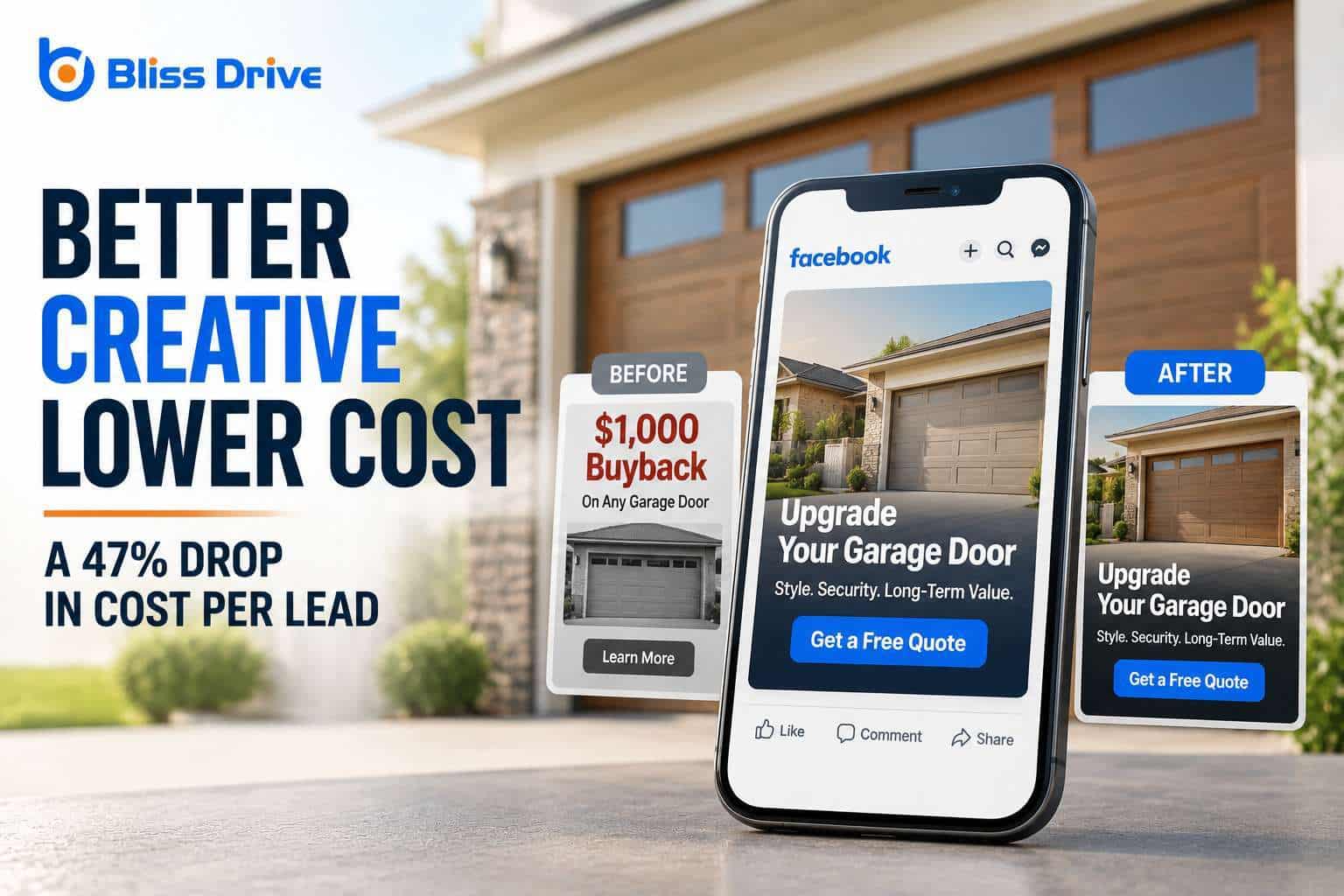
To lower cost per leadA potential customer referred by an affiliate who has shown interest in the product or service but h... on Meta ads, fix the creative before you touch the budget. One garage door company in the Denver metro area took cost per lead from $289 to $152, a 47% drop, during July 2026. The change was not more spend or a new platform. It was replacing a discount offerThe specific product or service being promoted by affiliates. with ads built around the company’s top-selling doors.
A price-led hook attracts people shopping on price, and price shoppers are the most expensive leads a high-ticket home business can buy. Select Garage Door Service learned that across two campaigns built on a "$1,000 Garage Door Buyback" offer. Those campaigns produced leads at roughly $289 each. The worse of the two cost $328 per lead.
The math gets uncomfortable fast. A buyback offer speaks loudest to the homeowner hunting for the cheapest possible door, not the homeowner ready to pay for a full replacement. Meta charges the same to reach both. Only one of them buys the work that carries margin.
Account drift made it worse. Geo-targeted campaigns across Douglas County, Boulder County, Colorado Springs, and the Denver metro had gone inactive, which left the two discount campaigns carrying the account.
The fix moved the angle from discount to desirability. Three changes did the work:
The test ran head-to-head from July 1 to 31, 2026. The buyback campaigns kept running as the control. Same objective, same platform, same month, so the comparison held up.
Metric | "$1,000 Buyback" creative (control) | Top-selling-door creative (test) |
|---|---|---|
Cost per lead | $289 | $152 |
Leads | 39 | 44 |
CPM | about $46 | $33.88 |
Cost per click | about $10 | $7.50 |
The test won on both sides of the ledger. It produced more leads than either buyback campaignA set of ad groups sharing a budget, targeting options, and other settings. while spending less than the larger one.
Two terms are worth keeping straight here. CPM is what you pay for 1,000 impressions, so it measures how cheaply Meta will show your ad. Cost per lead is what you pay for a completed form. Better creative pulls CPM down first, which puts more qualified eyes in front of the offer before anyone fills out anything.
The Select Garage Door Service case study showed that better creative-to-audience match can lower CPM, CPC, and CPL simultaneously by aligning the message with the right buyers.
The account spent $17,946 across active campaigns in July and produced 83 leads. At the test campaign’s cost per lead, that same spend would have produced roughly 118 leads. Call it 35 extra leads for no extra budget, which is the part most owners feel in their calendar rather than their dashboardA user interface that organizes and presents information in an easy-to-read format, typically showin....
Research outside the account points in the same direction. NCSolutions analyzed nearly 450 campaigns and found creative contributes 49% of a campaign’s sales impact while targeting contributes 11%. Marketers tend to believe the opposite. Audience settings and budget rules get the attention, and the creative doing most of the work gets tested least.
For home services, the gap costs more than average. Home and home improvement lead campaigns on Meta average $42.95 per lead against $27.39 across all industries, according to WordStream’s 2026 study of 452 US lead campaigns. Replacement work sits well above that average, so every dollar shaved off CPM compounds into real money across a full quarter of spend.
Lowering cost per lead on Meta ads does not always require more budget or broader targeting. In this case, a shift from discount-focused messaging to product-led creative reduced CPL by 47% while increasing lead volume. Testing stronger offers, clearer positioning, and a simpler conversion pathThe series of actions a user takes to complete a conversion, from entry to completion. can reveal where wasted spend is hiding.
Creative is often the most underused lever in lead generation campaigns. Before increasing budget or rebuilding audiences, test whether your ads are reaching the right buyers with the right message. Bliss Drive’s pay-per-click management team helps businesses build structured tests, measure results, and identify opportunities to improve campaign performance.
WordStream’s 2026 benchmark puts home and home improvement lead campaigns at $42.95 per lead on average, against $27.39 across all industries. High-ticket replacement work runs higher, often into the hundreds. Judge your number against your own close rate and average job value, not a published average. A $150 lead on a $6,000 job is a bargain.
No. Discounts work well for low-consideration purchases and for filling a slow week. The problem shows up on high-ticket replacement work, where a price-led hook draws bargain hunters and crowds out buyers with budget. Test a product-led version against your discount and compare cost per lead and close rate together, never lead volume alone.
Long enough to clear a full buying cycle and a usable sample. The Select Garage Door test ran the full month of July 2026. It settled at 44 leads for the new creative against 39 for the control before anyone called a winner. Three days of spend and a handful of leads measure noise, not creative quality.
Not when creative drove it down. Cheap leads pulled from a broad discount audience often close worse. Here, the cost fell because the ads matched high-income homeowners replacing a door, so the cheaper leads pointed at the most profitable jobs. Track close rate and average job value next to cost per lead to confirm the quality held.