
Learn More About Us
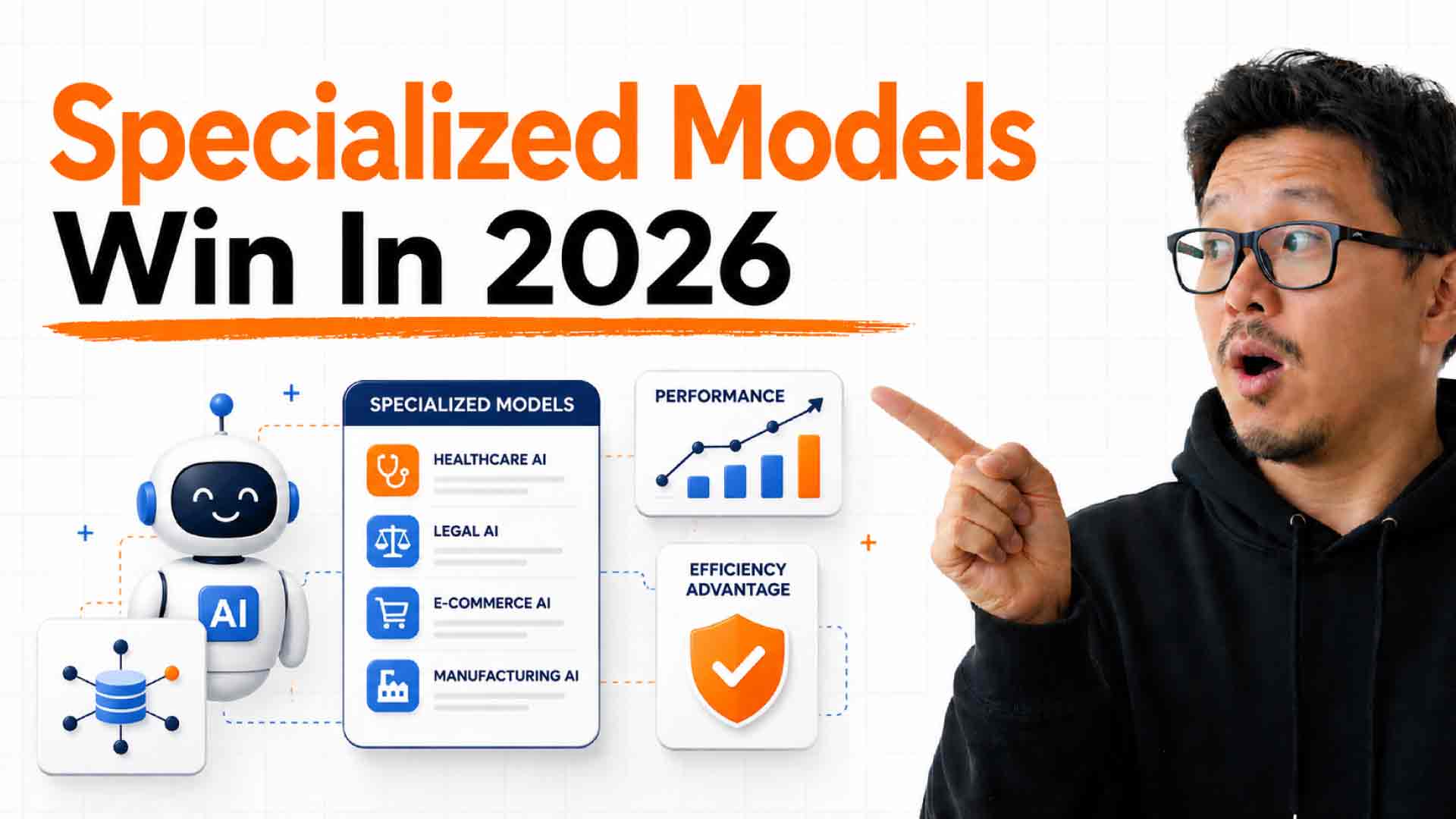
Industry-specific AI applications now shape how medical practices, law firms, solar operators, and home services companies run every day. In healthcare alone, the AI market is set to grow from $36.7 billion in 2025 to $505.6 billion by 2033. The pattern repeats across all four sectors: AI takes over routine work, so trained experts can spend more time on judgment.
AI in healthcare speeds up diagnosis, flags patient risk earlier, and trims administrative load. The market reflects that demand. Grand View Research valued AI in healthcare at $36.7 billion in 2025 and expects $50.7 billion in 2026 on the way to $505.6 billion by 2033. North America holds about 54% of that spend.
The clearest wins are in imaging and prediction. AI tools analyze scans to catch early signs of stroke, lung cancer, and fractures that rushed exams can miss. Predictive models read electronic health records to flag high-risk patients, including sepsis cases, hours before symptoms turn critical. In drug research, AI shortens early discovery by modeling how molecules behave.
Two cautions matter. Patient data privacyProtecting data from unauthorized access and ensuring the privacy of individuals' information. is a constant concern, and biased training data can widen care gaps. Human oversight remains essential.
For law firms, AI reads case law and contracts in seconds, then hands the lawyer a head start. Thomson Reuters reports that legal professionals expect AI to free up about 240 hours per year, up from 200 hours in 2024, worth roughly $19,000 per person annually.
Most of that time comes back from routine work. Natural language tools scan thousands of cases and surface relevant precedents. Contract software extracts risky clauses and key terms from large document sets. Those gains are already shifting economics: 40%+ of legal professionals expect hourly billing to decline over the next five years.
Lawyers draw a firm line, though. The consensus across the profession is that AI supports research and drafting but does not represent clients or give direct legal advice. A human keeps responsibility for accuracy and confidentiality.
AI helps solar operators in two ways: it forecasts how much power a site will produce, and it predicts equipment failure before it happens. The World Economic Forum reports that AI predictive maintenance can raise productivity by 25%, reduce breakdowns by 70%, and cut maintenance costs by 25%.
Forecasting leans on weather data, cloud imaging, and past performance to estimate output hour by hour. That lets grid operators balance supply and lean less on fossil-fuel backup. Machine learningA subset of artificial intelligence where computers use data to learn and make decisions. also times battery charging and discharging against real-time prices, which improves returns on stored energy. At the design stage, AI positions panels to limit shading.
The trade-offs are real. Linking energy infrastructure to AI raises cybersecurity exposure, and the models only work as well as the sensor data feeding them.
In-home services, AI runs scheduling, dispatch, and customer intake so crews stay booked and calls get answered. ServiceTitan's 2026 survey of 1,000 residential contractors found that 74% see AI as key to efficiency, while only about 25% use it meaningfully. Early adopters report real results: 48% saw higher productivity and 45% saw time savings.
The practical uses are specific. Automated dispatch matches the right technician to each job using location, skills, and history. AI chatbots and voice agents book appointments around the clock, so after-hours calls stop going to voicemail. In the field, machine learning flags HVAC problems before they become emergencies, and camera tools help plumbers spot hidden leaks.
Angie Snow, a Principal Industry Advisor at ServiceTitan and former contractor, said AI “can really help them streamline” daily operations for smaller shops. The main barrier is upfront cost, which strains small contractors the most.
The table below summarizes the leading AI use and the measured result in each industry.
Sector | Main AI use | Measured impact |
Healthcare | Imaging and risk prediction | Market: $36.7B (2025) to $505.6B (2033) |
Legal | Research and contract review | About 240 hours per year freed per professional |
Solar | Forecasting and predictive maintenance | Up to +25% productivity, -70% breakdowns |
Home services | Dispatch and customer intake | 48% of early adopters report higher productivity |
One thread runs through all four sectors: AI handles the repetitive work, and people make the judgment. A physician still reads the patient. A lawyer still owns the case. A solar engineer still signs off on the system, and a technician still fixes the furnace. AI clears the routine load so experts spend time where it counts.
There is a second shift worth noting. Customers in every one of these industries increasingly start their search with AI tools, not just Google. That changes how providers get found. Understanding how AI search engines recommend brands is now part of staying competitive.
AI is reshaping healthcare, legal, solar, and home services along the same line: automate the routine, protect the judgment. For owners in these fields, the next question is visibility. As more buyers rely on AI to choose providers, getting cited in those answers matters as much as ranking on Google.
Start by weighing the pros and cons of AI for a small business, then look at how AI visibility services help your brand show up in AI-generated answers.
No. Across all four sectors, AI automates routine tasks like scanning records, reviewing contracts, forecasting output, and booking jobs. It does not replace the physician's diagnosis, the lawyer's counsel, the engineer's sign-off, or the technician's hands-on repair. The consistent pattern is augmentation: experts keep judgment and use AI to move faster.
Healthcare leads in market size, with AI spending projected to reach $505.6 billion by 2033. Home services show the widest gap between interest and action: 74% of contractors value AI for efficiency, but only about 25% use it meaningfully. Legal adoption is steady, driven by clear time savings of about 240 hours per professional each year.
Each sector carries a different risk. Healthcare faces data privacy and biased training data. Legal work hinges on confidentiality and human review of AI output. Solar ties critical infrastructure to AI, which raises cybersecurity exposure and depends on clean sensor data. Home services contractors face upfront software and training costs, which hit smaller shops hardest.
Customers increasingly ask AI tools like ChatGPT, Perplexity, and Google AI Overviews for recommendations before they visit a website. That means a medical practice, law firm, or contractor can win or lose a leadA potential customer referred by an affiliate who has shown interest in the product or service but h... inside an AI answer. Showing up in those answers takes content built to be read and cited by AI engines.