

Learn More About Us

Google has never been more aggressive about filtering out content it doesn’t trust. At the same time, AI platforms like ChatGPT, Perplexity, and Gemini are making their own decisions about which sources deserve to be cited in generated answers. The common thread across both? E-E-A-T: Experience, Expertise, Authoritativeness, and Trustworthiness.
E-E-A-T isn’t a ranking factor you can toggle on or off. It’s a framework Google uses to evaluate whether content deserves to rank—and increasingly, it’s the same set of signals that AI platforms use when deciding which sources to cite. If your content doesn’t demonstrate real knowledge, verifiable credentials, and genuine trustworthiness, it’s getting filtered out of both traditional search and AI-generated answers.
This guide explains what E-E-A-T actually is, how each component works, what changed after Google’s December 2025 Core Update, and how AI platforms evaluate the same trust signalsElements that build trust with visitors, such as security badges, testimonials, and privacy policies.... Whether you’re a marketer, business owner, or content creator, understanding E-E-A-T in 2026 is essential for staying visible across every channel where your audience searches.
E-E-A-T stands for Experience, Expertise, Authoritativeness, and Trustworthiness. It’s the framework Google’s human quality raters use to assess whether a piece of content meets Google’s quality standards. These human evaluations don’t directly affect rankings for individual pages, but they inform how Google develops and refines its search algorithms over time.
The framework originally had three components—E-A-T (Expertise, Authoritativeness, Trustworthiness)—and was introduced in Google’s Search Quality Rater Guidelines. In December 2022, Google added the first “E” for Experience, recognizing that first-hand involvement with a topic is a distinct quality signal separate from formal expertise.
In 2026, E-E-A-T matters more than ever for two reasons. First, the explosion of AI-generated content has made it harder for Google to distinguish genuinely knowledgeable content from plausible-sounding but shallow material. Second, AI search platforms like ChatGPT, Perplexity, and Google’s own AI Overviews are now using similar trust signals to decide which sources deserve to be cited in their responses. Content that lacks visible E-E-A-T signals is getting filtered out of both traditional search and AI-generated answers.
Each letter in E-E-A-T represents a distinct quality signal, but they’re not independent—they compound. Content from an expert is more trustworthy. Content from someone with experience is more credible. Here’s what each component means and how Google’s systems detect it:
Component | What It Measures | How Google Detects It |
Experience | First-hand, personal involvement with the topic. Did the creator actually do the thing they’re writing about? | Original photos with EXIF data, unique details competitors lack, information gain vs. top 10 results, personal anecdotes with verifiable specifics |
Expertise | Deep, demonstrable knowledge of the subject. Does the creator have the qualifications or proven track record? | Author credentials, professional certifications, education history, consistent publication record, depth of analysis beyond surface-level content |
Authoritativeness | External recognition as a trusted source. Do others in the field acknowledge this person or brand? | Quality backlinksLinks from other websites pointing to your website, crucial for SEO., unlinked brand mentionsInstances where a brand is mentioned or tagged on social media platforms., proximity to seed sites (NYT, Wikipedia, Nature.com), branded search volume, industry citations |
Trustworthiness | Reliability and accuracy of the content and source. Can users trust the information and the creator? | HTTPS security, transparent About/Contact pages, physical address verified via Google Maps, editorial policies, factual accuracy, low intrusive ads, positive user behavior signals |
Of all four components, Google explicitly identifies Trust as the most important. The other three—Experience, Expertise, and Authoritativeness—all feed into Trust. A page can demonstrate strong expertise, but if the site itself appears untrustworthy (no contact information, deceptive practices, poor user experience), it still fails the E-E-A-T evaluation.
The “Experience” component is the newest addition to E-E-A-T and represents Google’s increasing ability to distinguish between content created from first-hand knowledge and content synthesized from other sources. In a world where AI can generate plausible-sounding content on any topic, experience signals have become a critical differentiator.
Google detects experience through several mechanisms. Visual fingerprinting analyzes uploaded photos for EXIF data—camera type, GPS coordinates, timestamps—to verify that images are original rather than stock photos. Information gain scoring measures whether a page contributes new information compared to the top 10 existing results on the same topic. Content that merely summarizes what’s already available adds little value; content that provides unique observations, original data, or first-hand details scores higher.
The practical difference is significant. A product review that says “this laptop has a 14-inch display and fast performance” reads like a spec sheet anyone could write. A review that says “After using this laptop for three months of daily video editing, the fan gets noticeably loud during 4K exports, but battery life held up better than I expected at around 6.5 hours of mixed use” demonstrates experience that Google’s systems can distinguish.
Expertise and Authoritativeness are related but distinct signals. Expertise is about what you know—your qualifications, depth of knowledge, and track record. Authoritativeness is about what others say about you—external validation, citations, and recognition from peers and trusted institutions.
Google evaluates expertise primarily through author-level and content-level signals. At the author level, this includes professional credentials, education, certifications, and a consistent publication history in the subject area. Author bio pages with verifiable details carry more weight than anonymous content. At the content level, expertise shows through depth of analysis, accurate use of technical terminology, logical structure, and the ability to contextualize information within the broader field. Expertise is demonstrated through how content is written, not just who wrote it.
Authoritativeness comes from external recognition. Google measures this through several mechanisms that are difficult to fake. Seed site proximity measures how many “hops” separate your domain from trusted benchmark sites like the New York Times, Wikipedia, or Nature.com—the closer, the better. Unlinked brand mentions are counted as citations of authority even without clickable links, and they’re harder to manufacture than traditional backlinks. Branded search volume—people searching for “[Your Name] + [Topic]”—signals authority through Google’s Navboost system. Quality backlinks from relevant, established domains in your field remain a core authority signal.
Google’s Quality Rater Guidelines explicitly place Trust at the center of the E-E-A-T framework. A page might demonstrate strong expertise on a topic, but if the overall site appears untrustworthy—deceptive practices, missing contact information, poor security—that expertise is undermined. Trust is the outcome that all other E-E-A-T signals contribute to.
Trustworthiness signals fall into several categories that Google’s systems evaluate:
Security and transparency: HTTPS encryption is non-negotiable. An accessible About Us page, a Contact page with a physical address (verifiable through Google Maps), and a clear editorial or content policy all signal transparency. Sites without these basics raise immediate trust flags.
Factual accuracy and sourcing: Content that cites reputable sources, includes specific data points with attribution, and avoids misleading claims scores higher. Google’s systems cross-reference claims against known information to detect inaccuracies.
Content freshnessThe relevance and recency of content on a web page.: Visible “Last Updated” dates and regular content maintenance signal active stewardship. Outdated content—especially on fast-moving topics—erodes trust. The December 2025 Core Update specifically penalized content that hadn’t been refreshed or maintained over time.
User experience signals: Low intrusive ads, clean page layouts, fast loading times, and positive behavioral metrics (dwell time, low bounce rates) all contribute to trust assessments. Sites with aggressive pop-ups, slow load times above 3 seconds, or content buried below ads saw disproportionate ranking losses in the December 2025 update.
Reviews and social proofThe influence that other people’s actions have on one's own behavior, often seen in likes, shares,...: Positive user reviews, testimonials, and social proof visible on the site reinforce trustworthiness. For businesses, Google Business Profile reviews and third-party review site ratings also factor in.
The December 2025 Core Update was the third and most impactful core update of 2025, rolling out from December 11 to December 29. It fundamentally raised the bar for E-E-A-T across virtually all content categories—not just traditional YMYL topics like health and finance.
Previously, Google applied its most rigorous E-E-A-T standards primarily to Your Money or Your Life (YMYL) content—topics that could impact someone’s health, financial security, or safety. The December 2025 update extended these requirements to nearly all competitive searches, including e-commerce product reviewsCustomer feedback on products, which can influence purchasing decisions and build trust., SaaS comparisons, how-to guides, and general informational content. A poorly researched tech tutorial now faces the same quality scrutiny as a medical advice page.
Analysis of 847 affected websites across 23 industries revealed stark differences in outcomes. E-commerce sites saw 52% impact rates. Health and YMYL content experienced 67% impact rates. AffiliateAn individual or company that promotes a product or service in exchange for a commission on the resu... sites were hit hardest at 71%. Mass-produced AI content without expert oversight saw up to 87% negative impact. Meanwhile, sites with deep content clusters of 10–15 high-quality supporting articles gained an average of 23% in visibility.
The update rewarded content demonstrating genuine expertise and experience—not just surface-level optimization. Sites with clear author attribution, verifiable credentials, original research, and comprehensive topical coverage gained ground. Specialist sites outperformed generalists: Vinted gained 386.8% visibility by focusing deeply on second-hand fashion, while broad generalist portals lost significant ground. The message was clear—depth and focus beat breadth and volume.
Sites with thin, templated content, mass-produced AI output without human editorial oversight, and outdated pages that hadn’t been refreshed saw the largest losses. Technical performance also mattered: sites with Largest Contentful Paint (LCP) above 3 seconds experienced 23% more traffic loss than faster competitors with similar content quality. Google’s tolerance for ambiguous, mixed-intent content also dropped—pages trying to serve both informational and commercial intents underperformed pages that did one job exceptionally well.
The rise of AI search platforms adds a new dimension to E-E-A-T. ChatGPT (800 million weekly active users), Perplexity, Google AI Overviews, and Gemini all make citationA mention of a business's name, address, and phone number on other websites. decisions based on signals that closely parallel Google’s E-E-A-T framework—even though they process content differently.
When a user asks an AI platform a question, the system retrieves content from the web, evaluates it for relevance and credibility, and synthesizes an answer that cites the most authoritative sources. Analysis of 36 million AI Overviews confirms that these systems consistently select credible, authoritative sources. AI platforms process over 2.5 billion prompts daily, and their source selection favors content with strong E-E-A-T signals—domain authority, factual accuracy, clear authorship, and structured formatting.
Each AI platform has distinct citation patterns. ChatGPT averages approximately 7.9 citations per response and favors domain rating as a key factor, with Wikipedia serving as its most-cited source at 7.8% of total citations. Perplexity averages roughly 21.9 citations per response—nearly three times more than ChatGPT—and emphasizes content depth and recency over encyclopedic authority. Google AI Overviews pull approximately 92% of their citations from domains already ranking in the top 10 organically, making traditional SEO performance a prerequisite for AI visibility.
Research from the Princeton GEO study found that incorporating cited statistics, authoritative language, and clear source attribution into content improved AI visibility by 30–40%. Content structured with descriptive headings and extractable lists is three times more likely to be cited by AI platforms. Author attribution, schema markupCode added to a website to help search engines understand the content. (Article, FAQ, Organization), and consistent brand mentions across the web all strengthen citation likelihood. The same E-E-A-T qualities that help you rank in Google help you get cited in AI responses.
YMYL stands for “Your Money or Your Life”—content categories where inaccurate or misleading information could cause real harm to readers. These topics include medical and health information, financial advice, legal guidance, safety-related content, and major life decisions. Google applies significantly stricter E-E-A-T standards to YMYL content because the stakes of getting it wrong are higher.
For YMYL content, Google expects qualified professionals to create or review the material. A health article should be written or reviewed by a licensed healthcare provider. Financial advice should come from certified professionals. The December 2025 update reinforced this standard—health and finance sites without demonstrable expertise experienced ranking losses exceeding 60% in some cases. Websites without transparent author credentials, verifiable qualifications, or clear editorial review processes had virtually no chance of ranking for YMYL queries.
The critical 2026 development is that YMYL-level scrutiny is now expanding into adjacent categories. Google’s systems increasingly evaluate all competitive content through a quality lens that used to be reserved for sensitive topics. While a recipe blog doesn’t need medical credentials, it does need to demonstrate genuine cooking knowledge and experience—the bar has risen across the board.
Many websites attempt to improve their E-E-A-T signals but make mistakes that either waste effort or actively hurt credibility. Here are the most common pitfalls:
Building genuine E-E-A-T takes sustained effort—months, not weeks. There are no shortcuts, but there are clear, actionable steps that compound over time:
Demonstrate experience with original content: Include first-hand observations, original photos, proprietary data, case studiesIn-depth analyses of specific instances or examples to highlight success stories or lessons learned...., and specific details that can’t be replicated from secondary sources. If you’ve actually used a product, treated patients, or built software, show it through unique details that prove your involvement.
Establish expertise through author attribution: Every piece of content should have a visible, linked author name. Each author should have a dedicated bio page listing their credentials, years of experience, relevant certifications, and areas of expertise. This applies to both Google’s quality raters and AI platforms evaluating source credibility.
Build authority through off-site signals: Contribute expert commentary to industry publications. Earn coverage from news outlets and trade media. Maintain consistent brand information across directories and professional profiles. Engage on platforms where your expertise is relevant—industry forums, professional networks, and community discussions.
Reinforce trust through transparency: Maintain clear About Us, Contact, and Editorial Policy pages. Use HTTPS. Display a verifiable physical address. Implement clear privacy policies. Keep ads non-intrusive. Make your site fast, mobile-friendly, and easy to navigate. These basics are table stakes that too many sites still neglect.
Maintain content freshness: Audit and update high-value content quarterly. Add visible “Last Updated” dates. Replace outdated statistics with current data. Remove references to discontinued products or obsolete tools. Content maintenance is now a ranking signal, not just a best practice.
Implement schema markup: Add Article, Author, FAQ, and Organization schema to your pages. Schema helps both Google and AI crawlers understand your content’s structure, authorship, and context. Use Google’s Rich Results Test to validate your implementation.
Publish original research: Create surveys, data studies, benchmark reports, or proprietary analyses. Original research attracts citations from other sites, earns backlinks, gets referenced by AI models, and positions you as a primary source rather than a secondary summarizer. Princeton’s GEO research found that content with specific statistics improved AI citation rates by 30–40%.
E-E-A-T isn’t a single metric you can track in a dashboardA user interface that organizes and presents information in an easy-to-read format, typically showin.... It’s an aggregate quality assessment that manifests through several measurable proxies:
Organic ranking stability: Sites with strong E-E-A-T signals tend to maintain stable rankings through core updates rather than experiencing dramatic drops. If your site weathers core updates well, your E-E-A-T signals are likely strong. Volatility suggests gaps.
AI citation tracking: Monitor whether your content appears as a cited source in ChatGPT, Perplexity, Google AI Overviews, and Gemini responses for queries in your topic area. Tools like Profound, Otterly.ai, and Ahrefs Brand Radar can help automate this. Manual testing across 30–50 relevant queries monthly gives a practical baseline.
Branded search volume: Growth in searches for “[Your Brand] + [Topic]” indicates increasing authority and recognition. Google’s Navboost system uses branded search as a proxy for authority.
Brand mention tracking: Monitor unlinked mentions of your brand across the web using tools like Google Alerts, Mention, or BrandMentions. Growing mention frequency in authoritative contexts signals increasing authoritativeness.
Core Web Vitals and user behavior: Track LCP, INP, and CLS in Google Search ConsoleA tool by Google that helps monitor and maintain your site's presence in search results.. Monitor bounce rates, dwell time, and pages per session. Strong user behavior signals reinforce trust assessments. Sites with LCP above 3 seconds experienced disproportionate losses in the December 2025 update.
Content auditA thorough review of existing content to assess its effectiveness and identify gaps. scores: Conduct quarterly content audits evaluating each page against E-E-A-T criteria: Does it have an author byline? Are claims sourced? Is the information current? Are experience signals visible? Is the page technically healthy? Systematic auditing identifies gaps before they affect rankings.
No. E-E-A-T is not a direct input to Google’s ranking algorithm the way backlinks or page speedThe time it takes for a webpage to load, affecting user experience and conversion rates. are. It’s a conceptual framework that Google’s human quality raters use to evaluate content. Those evaluations inform how Google develops and refines its algorithms. So while you can’t optimize for a specific E-E-A-T “score,” content that demonstrates strong E-E-A-T qualities consistently performs better because Google’s algorithms are designed to reward those qualities.
No. Google has stated clearly that its systems evaluate content quality regardless of how it was produced. Content created with AI assistance can demonstrate strong E-E-A-T if it’s reviewed by subject matter experts, includes original insights and experience signals, and maintains factual accuracy. What fails is mass-produced AI content with no human oversight—content that lacks the depth, originality, and expertise signals that E-E-A-T requires. The December 2025 update saw mass-produced AI content without expert review experience up to 87% negative impact.
E-E-A-T is built over months and years, not days or weeks. Some improvements are relatively quick—adding author bios, implementing schema markup, fixing transparency pages—and can show effects within weeks. Building genuine authority through backlinks, brand mentions, and industry recognition takes 6–12 months of sustained effort. Developing deep topical expertise through comprehensive content clusters takes longer still. The key is consistency: E-E-A-T compounds over time, much like building a professional reputation offline.
Yes. In fact, E-E-A-T can work in favor of small businesses that serve specific niches. A local HVAC company with 20 years of experience, genuine customer reviews, and detailed service content can demonstrate stronger E-E-A-T for local queries than a national content mill with no real service expertise. Small businesses have natural experience and expertise signals—the challenge is making those signals visible through proper attribution, transparent business information, and structured content.
The same core principles apply: authoritative content, visible author credentials, factual accuracy, and structured formatting. However, AI platforms additionally value consistent brand mentions across the web (not just on your own site), structured data that helps AI crawlers parse your content, high fact density with specific statistics and data points, and content freshness with visible update dates. Building a presence on platforms that AI models reference frequently—Wikipedia, major industry publications, Reddit, professional directories—also increases citation likelihood.
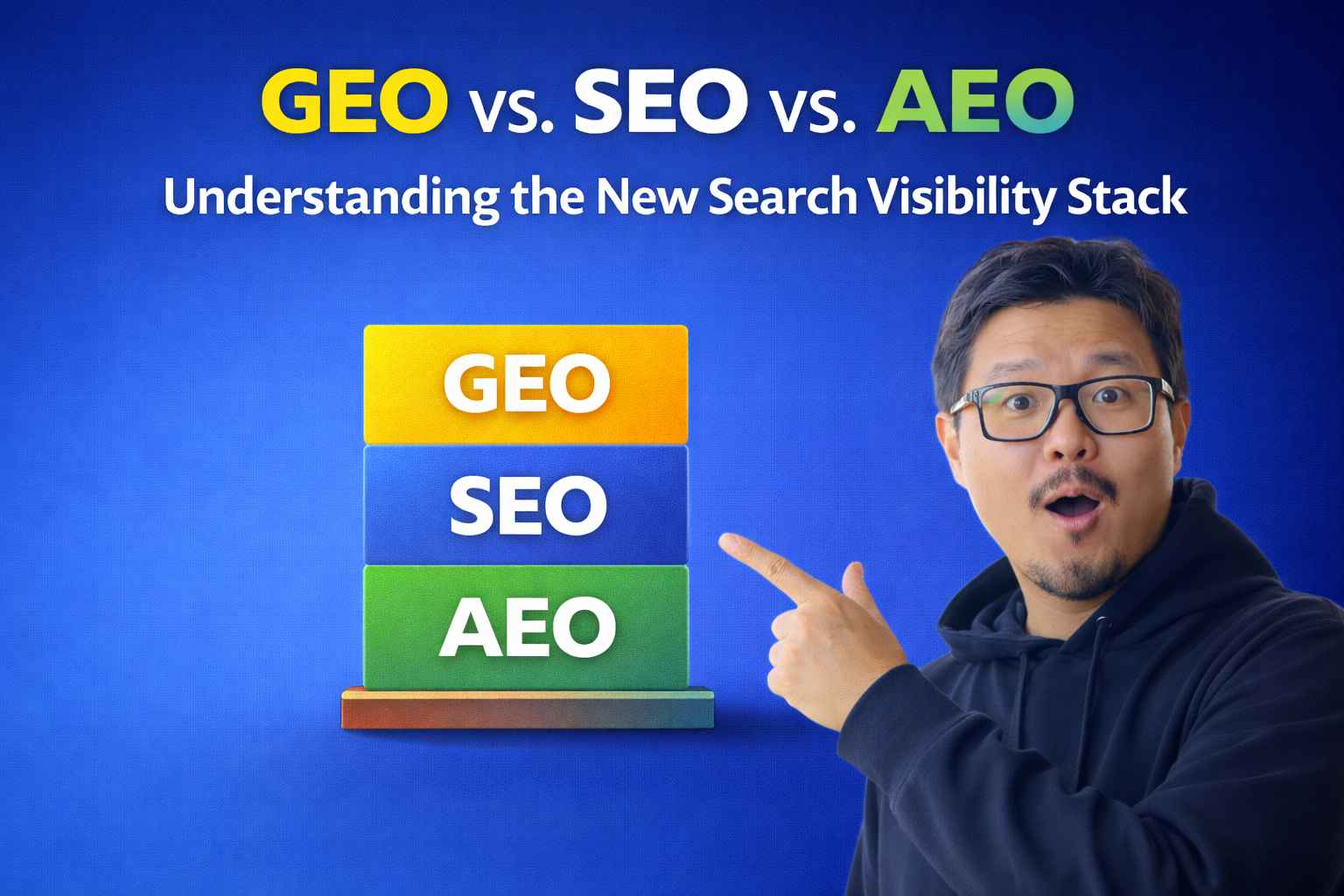
E-E-A-T and Generative Engine Optimization (GEO) are deeply connected. E-E-A-T describes the quality signals that build trust and authority. GEO is the practice of making your content visible to AI search platforms. Strong E-E-A-T is effectively a prerequisite for successful GEO—AI platforms won’t cite content that lacks credibility, expertise, or trustworthiness. Investing in E-E-A-T simultaneously improves your performance in traditional search, AI Overviews, and AI chat platforms.
E-E-A-T isn’t a tactic you implement once and check off a list. It’s a reflection of whether your content genuinely comes from knowledgeable, experienced, trustworthy sources—and whether that quality is visible to both Google’s algorithms and AI platforms. In 2026, with AI content flooding the web and AI platforms becoming major discovery channels, the gap between sites with strong E-E-A-T and those without is widening.
The December 2025 Core Update made the stakes clear: generic, unattributed, shallow content is losing ground rapidly. Specialist content with demonstrable expertise, transparent authorship, and genuine experience signals is gaining. AI platforms are reinforcing this trend by citing sources that exhibit the same trust qualities Google rewards.
Start with the fundamentals. Ensure every page has clear authorship, verifiable expertise, transparent business information, and current, accurate content. Build outward through industry contributions, earned media, and consistent brand presence across the web. Measure your progress through ranking stability, AI citations, and branded search growth. The businesses that treat E-E-A-T as a continuous investment—not a one-time project—will hold positions that competitors will struggle to challenge.
Takeaway: E-E-A-T isn’t about gaming an algorithm. It’s about being genuinely trustworthy—and making that trustworthiness visible. In 2026, that’s the price of admission for both traditional search and AI-powered discovery.