Learn More About Us
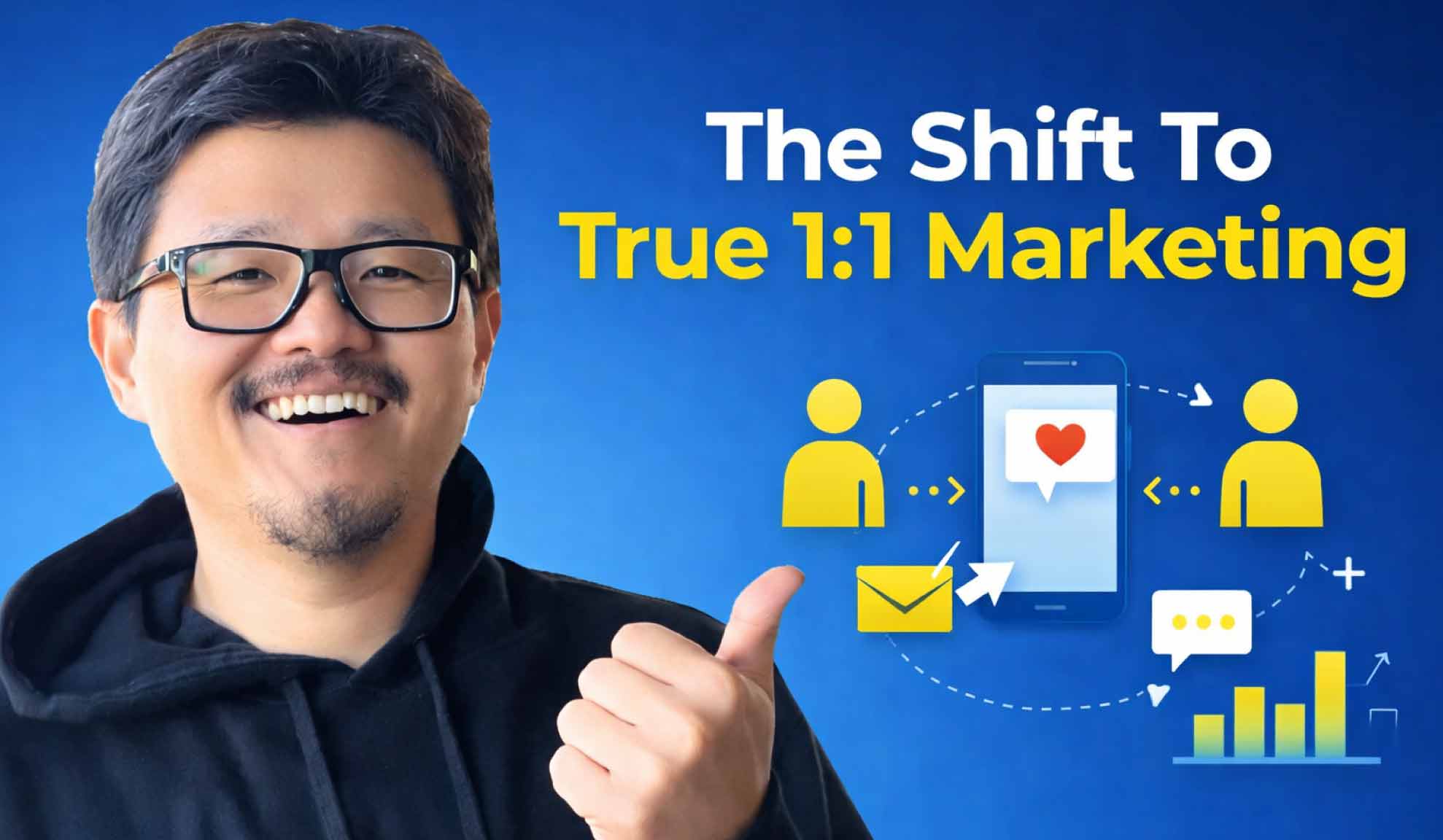
Hyper-personalization is the practice of using AI to shape every marketing touchpoint to one person's life behavior, context, and intent. It replaces broad audience segments with individual decisions made in the moment. McKinsey research shows 71% of consumers expect personalized interactions, and 76% feel frustrated when brands miss the mark.
Regular personalization sorts people into fixed groups. Hyper-personalization treats each person as a segment of one. The first works from what it already knows about you. The second reacts to what you are doing right now.
A traditional campaignA set of ad groups sharing a budget, targeting options, and other settings. might email women aged 25 to 34 in Chicago about winter coats. Useful, but rigid. It cannot see that someone just searched for hiking boots. Hyper-personalization reads live signals and changes the message, timing, and offer on the spot.
Dimension | Regular Personalization | Hyper-Personalization |
Data inputs | Static demographics and past purchases | Live behavior, location, and context |
Segments | Broad groups updated monthly | Individual cohorts updated in real time |
Decisions | Manual if-then rules | Self-learning AI models |
Content | Templates with a name field | Generated copy, images, and layout per person |
Timing | Scheduled batch sends | Triggers based on live activity |
A first name in a subject lineThe heading or title of an email, designed to entice recipients to open it. is the bare minimum. Customers stopped being impressed years ago.
The case is commercial, not cosmetic. Brands that get personalization right grow faster and spend less to win each customer.
McKinsey found that fast-growing companies generate 40% more of their revenue from personalization than slower-growing peers. The same research shows personalization can reduce customer acquisition costs by as much as 50% and lift marketing ROI by 10% to 30%.
The money is following the demand. Grand View Research valued the global hyper-personalized technology market at $29.74 billion in 2025, with a forecast of $144.65 billion by 2033. That is a 22% compound annual growth rate, and North America held the largest share at 33%. Personalization is one piece of a bigger shift in how AI is reshaping the marketing funnel.
One marketer cannot hand-craft a message for a million people. AI does it through a connected, four-layer stack, where each layer feeds the next.
Skip a layer, and the system breaks. Bad data creates hallucinated profiles and recommendations that feel random or wrong.
Customers want relevance and resent the surveillance that creates it. This tension is the central challenge of hyper-personalization, and ignoring it costs trust.
Three risks sit at the center. The creepiness factor: inferring something private a customer never shared, like a pregnancy, reads as invasive and pushes people away. Algorithmic bias: models trained on skewed data repeat and amplify that bias in who they target and what they charge. Filter bubbles: showing people only what they already like traps them in repetitive loops and kills discovery.
Deployment is also harder than the hype suggests, one of the real pros and cons of AI for small businesses. Gartner predicts that more than 40% of agentic AI projects will be canceled by the end of 2027, based on a survey of over 3,412 organizations. Most current projects are “early-stage experiments or proof of concepts that are mostly driven by hype and are often misapplied,” said Anushree Verma, senior director analyst at Gartner.
The fix is a privacy-first design, not less personalization. Collect only the data you need. Tell people why they are seeing a recommendation. Replace accept-or-reject cookie banners with preference centers. Audit your models for bias. For California businesses, the CCPA already requires an opt-out, so building this in is both smart and required.
Hyper-personalization at scale works when brands use AI to make customer experiences more useful, timely, and respectful. The opportunity is real, but the best results come from clean first-party data, clear customer choices, strong privacy controls, and human oversight. The goal is not to track people everywhere. It is to use the data they willingly share to deliver better content, offers, and support.
If you are still deciding how AI should fit into your marketing strategy, read Bliss Drive’s guide to the real pros and cons of AI for small businesses to see where AI creates value, where it adds risk, and how to adopt it responsibly.
Personalization uses fixed data like name, age, or past orders to sort customers into groups. Hyper-personalization uses live signals like current browsing, location, and intent to adjust the experience for one person in the moment. The first is a static rule. The second is a continuous, AI-driven decision that updates in real time.
This is not just for the giants. Customer Data Platforms and recommendation engines are now available without an Amazon-sized budget. A mid-sized business with clean first-party data and a clear use case, like cart recovery or onboarding, can see strong returns. Start with one high-value moment rather than personalizing everything at once.
You need consented first-party data from your own channels and zero-party data that customers share directly. Purchase history, browsing behavior, and preference selections are the most useful starting points. You do not need third-party cookies. Owned data is more accurate and more durable as privacy rules tighten.
Yes, when done correctly. The CCPA and CPRA give California consumers the right to opt out of data sharing and to limit the use of sensitive information. Hyper-personalization can be legal under California privacy law when covered businesses provide clear notice, honor opt-out requests for sale or sharing, respect limits on sensitive personal information, and avoid collecting or using data beyond what they disclose.