Learn More About Us
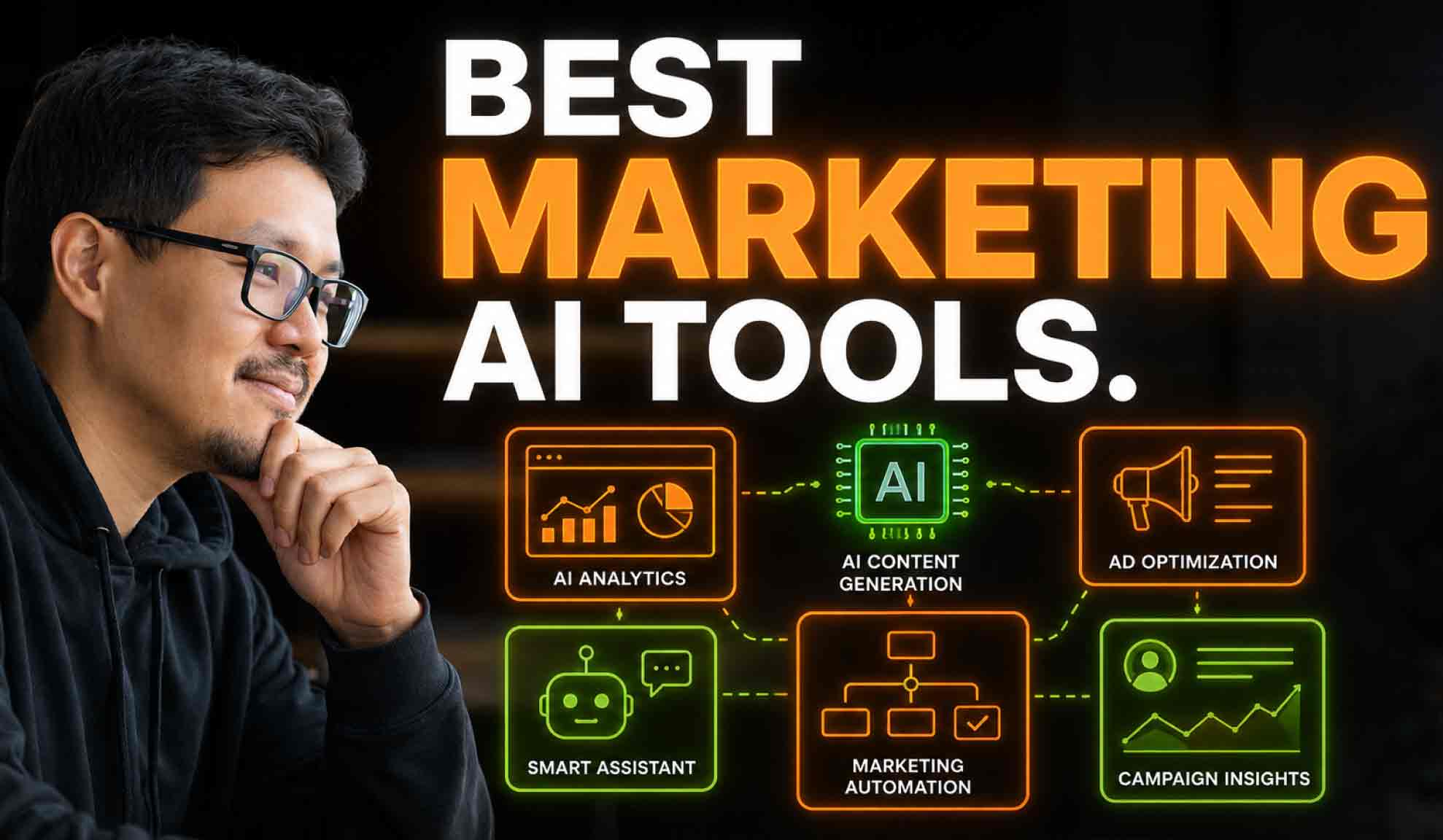
The best AI marketing tools for small businesses in 2026 are HubSpot for CRM and automationUsing software to send emails automatically based on predefined triggers and schedules., Jasper for copywriting, Surfer SEO and Semrush for search, Canva Magic Studio for design, and Cometly or Needle for paid ad attribution. As of 2026, 82% of small business employers have invested in AI tools, according to the SBE Council. The right pick depends on your goal, not the longest feature list.
Most small businesses that use AI report measurable gains. A 2025 QuickBooks survey found that 68% of U.S. small businesses now use AI regularly, up sharply from 48% in mid-2024. The SBE Council puts AI investment among small business employers at 82%. The returns hold up: an IDC study for Microsoft measured an average $3.70 return for every $1 spent on generative AI, and BizBuySell reported in early 2026 that 83% of AI-using small businesses see gains.
The shift is partly about price. Tools that once needed an in-house engineering team now run on a $20 a month subscription. Recent 2026 economic data reported that small businesses had begun adopting AI faster than large firms. For a lean three-person team, that changes what is possible.
Here is how the leading platforms compare, grouped by what they do best. Prices below are 2026 starting rates and change often, so confirm current pricing before you buy.
Tool | Best for | Starting price | Main drawback |
|---|---|---|---|
HubSpot Marketing Hub | CRM and multi-channel automation | Free; paid from ~$20/mo | Pro tier jumps to ~$890/mo |
Jasper | On-brand copywriting at volume | $69/mo | No free tier |
Surfer SEO | On-page SEOOptimization techniques performed directly on the website, including content and HTML source code. and AI search tracking | $99/mo | On-page only, narrow scope |
Semrush | All-in-one SEO and competitor data | $199/mo | Dense, steep learning curve |
Canva Magic Studio | Graphic design for non-designers | Free; Pro $14.99/mo | Templates can look generic |
Cometly | Paid ad attribution | Custom (spend-based) | Best above ~$3,000/mo ad spendThe total amount of money spent on advertising campaigns. |
Needle | Hybrid AI plus human ad service | ~20% of ad spend | Built for Shopify DTC only |
HubSpot ties marketing, sales, and service data into one CRM, then layers its Breeze AI engine on top for writing, lead scoringRanking leads based on their likelihood to convert, often using behavioral data and demographics., and a support chatbot.
Pro: the free tier lets a small team track contacts and email at no cost.
Con: advanced AI agents sit behind the Professional plan, which costs nearly $800 a month, a steep jump for a very small business.
Jasper trains on your style guide and products, so its output sounds like your brand, not generic AI. Its CampaignA set of ad groups sharing a budget, targeting options, and other settings. Canvas builds blog posts, ads, and emails from one prompt.
Pro: brand-voice consistency beats general chatbotsAutomated programs that simulate human conversation to assist customers and improve their shopping e....
Con: There is no free tier, and long posts still need human editing to cut repetition. Jasper starts at $69 per user a month.
Surfer SEO scores your draft against top-ranking pages and, new for 2026, tracks how often your brand gets cited in ChatGPT, Perplexity, and Google AI Overviews. Semrush goes wider, adding keyword researchThe process of finding and analyzing search terms that people enter into search engines., backlinksLinks from other websites pointing to your website, crucial for SEO., and competitor analysisEvaluating the strengths and weaknesses of competitors’ SEO strategies..
Pro: Surfer is precise on a single page; Semrush is deep across a strategy.
Con: Surfer skips backlinks and technical audits, and Semrush starts at $199 a month with a dense interface. If AI search matters to you, the right GEO tools for AI visibility are worth a closer look.
Canva Magic Studio generates social posts, removes photo backgrounds, and writes captions inside the editor, no design training needed.
Pro: At $14.99 a month, Canva Pro replaces a freelance designer for routine work.
Con: Popular templates can make your brand look generic unless you customize them.
Both fix the tracking gaps that privacy rules created for Meta and Google ads. Cometly uses server-side tracking to show which creative actually drives sales. Needle pairs AI automation with human strategists who run campaigns for you.
Pro: clear attribution stops wasted ad spend.
Con: Cometly only makes sense above roughly $3,000 a month in ad spend, and Needle is built for Shopify direct-to-consumer brands, not local services or B2B.
Start small and add tools as you grow. Buying every platform at once fragments your data and kills your return. A workable sequence:
One honest caution: do not publish raw AI drafts. Google rewards experience and expertise, and unedited AI content tends to rank poorly and read flat. Use AI to speed up research and drafts, then have a person add real client storiesA feature on platforms like Instagram and Facebook where users can post photos and videos that disap... and polish. Keep customer records and financials out of public AI models, too.
The best AI marketing tools for small businesses in 2026 are not the ones with the biggest feature lists. They are the tools that solve your next real bottleneck: organizing leads, producing better content, improving search visibility, creating faster designs, or proving which ads actually drive revenue.
Start with a simple CRM and design tool, then add writing, SEO, and attribution platforms only when your team has the process and budget to use them well. AI can speed up marketing, but it still needs human judgment, brand knowledge, and careful editing to produce work that earns trust.
If you want help building a stack for both Google and AI search, Bliss Drive AI visibility, and GEO services, map the tools to your specific goals.
HubSpot's free CRM and Canva's free plan are the strongest no-cost starting points. HubSpot tracks contacts, forms, and email in one place, while Canva covers basic design. Both have paid upgrades you can add later. General chatbots are also free for drafting copy, but lack brand-voice training.
Google does not penalize content for being AI-assisted. It penalizes low-quality, unhelpful content, it was made. Raw, unedited AI drafts often fall short on the experience and expertise Google rewards. A hybrid approach, AI drafting plus human editing, performs best.
A lean stack runs $50 to $300 a month: Canva Pro at $14.99, a writer like Jasper at $39, and an SEO tool like Surfer at $99. Ad attribution platforms cost more and scale with ad spend. Start with free tiers, then upgrade only the tools that show a return.
AI tools handle execution, not strategy or judgment. They speed up writing, design, and reporting, but still need someone to set direction, edit for accuracy, and read the results. Many small businesses pair AI tools with an agency or strategist rather than choosing one.